How Does a Strapless Strapon Work: A Basic Introduction
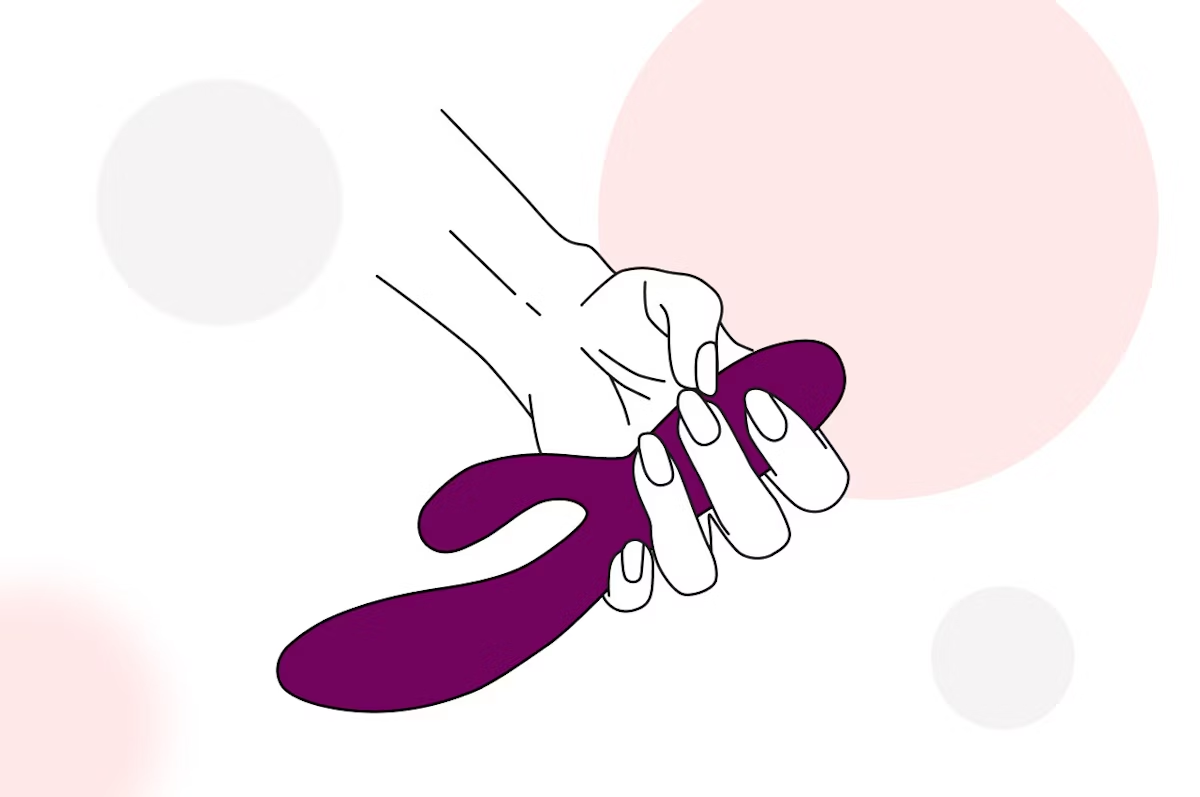
A strapless strapon is a dual-ended toy that stays in place without harness straps. The shorter “bulb” is inserted vaginally into the wearer’s body; the longer “shaft” protrudes like a traditional dildo. Once the wearer’s pelvic-floor muscles grip the bulb, the toy becomes an extension of the body, transferring every hip thrust directly to the partner. Because nothing wraps around thighs or waist, skin-to-skin contact is maximized and the psychological feeling of “wearing nothing” is a key part of the appeal. The toy essentially turns the wearer’s pubic bone into a pivot point, creating a natural fulcrum that moves the shaft in smooth arcs rather than the jabbing motion often associated with harness models.
The Mechanics of How a Strapless Strapon Works
Inside the silicone skin lies a rigid but slightly flexible core—usually medical-grade silicone molded over a stainless-steel or hard-plastic spine. This spine is thinner in the neck between bulb and shaft, allowing the shaft to flex upward when pressure is applied to the bulb. When the wearer contracts her Kegel muscles, the bulb compresses slightly, increasing internal friction and anchoring the toy more securely. The angle of the shaft relative to the bulb is typically 25–35°, chosen after extensive ergonomic studies by brands such as Fun Factory and Wet For Her. According to a 2022 Kinsey Confidential review, this angle reduces lower-back strain by 18 % compared with 45° designs, making longer sessions more comfortable.
Step-by-Step Guide to Using a Strapless Strapon
Start with a generous coat of water-based lubricant on both ends. The wearer should lie on her back, knees bent, and insert the bulb slowly while relaxing her pelvic floor. Once the bulb is fully seated, she stands up and consciously performs five quick Kegel pulses to “seat” the toy against her pubic bone. Next, apply lube to the shaft and guide the receiving partner into a comfortable position—spooning or receiver-on-top is easiest for beginners. The first few thrusts should be shallow until both partners find the rhythm. If the toy begins to slip, the wearer can tighten her Kegels or press the bulb forward with her hand for a moment, then resume thrusting. Many couples find that a slight forward tilt of the wearer’s hips keeps the bulb anchored without discomfort.
Benefits of a Strapless Strapon Compared to Traditional Options
No straps mean no chafing, no awkward buckle adjustments, and zero laundry afterward. The wearer receives simultaneous G-spot stimulation from the bulb, which increases arousal and natural lubrication. A 2021 survey by the sex-positive blog Autostraddle found that 73 % of respondents who switched from harness to strapless models reported orgasming during penetration for the first time. The visual aesthetic is also cited as a benefit: the shaft appears to grow organically from the wearer’s body, reducing the “barrier” feeling some couples experience with leather harnesses. Finally, travel is simpler—there’s no metal hardware to trigger TSA alarms, and the toy can be coiled inside a toiletry bag without losing shape.
Common Challenges and Solutions with Strapless Strapons
The most frequent complaint is “it keeps falling out.” This usually stems from weak pelvic-floor muscles or choosing a bulb that is too small. A 2020 study published in the Journal of Sexual Medicine found that women who practiced Kegel exercises three times a week for six weeks increased bulb retention time by an average of 4.3 minutes. Another issue is shaft droop; if the silicone core is too soft, the shaft can bend downward on the out-stroke. Purchasing a model with a firmer spine or adding a cheap fabric harness as training wheels solves this without sacrificing the strapless concept. Finally, some couples report emotional awkwardness the first time; open communication and starting with the wearer on her back can reduce performance pressure.
Safety Tips for Effective Strapless Strapon Use
Always sanitize the toy before and after use with a 10 % bleach solution or medical-grade toy cleaner. Because the bulb is worn internally, urinary-tract infections are a risk if bacteria are transferred from anus to vagina—never switch from anal to vaginal penetration without sterilizing. Use only water-based lubes; silicone-based products can degrade the toy’s surface over time. If either partner feels numbness or tingling, pause immediately—compression of the pudendal nerve can occur if the bulb is too large or worn for more than 30 continuous minutes. Finally, keep a safe-word signal; because the wearer’s mouth is unencumbered by straps, verbal check-ins are easier than with traditional harnesses.
How Does a Strapless Strapon Work for Different Body Types?
Petite wearers often need a shorter shaft (≤ 5.5 in) to prevent the tip from hitting the receiver’s cervix, while plus-size wearers may prefer a longer neck that compensates for additional padding around the mons pubis. People with tilted uteruses should select bulbs with a forward curve to avoid pressure on the anterior vaginal wall. Post-menopausal users can benefit from warming the toy in a bowl of warm water first; cooler silicone can exacerbate vaginal dryness. Trans men who have been on testosterone may find that increased clitoral growth provides extra friction against the bulb, improving stability. Several brands now offer “mini bulbs” (1.25 in diameter) specifically for users with vaginismus or pelvic-floor hypertonia.
Cleaning and Maintenance Best Practices
Boilable medical-grade silicone models can be submerged in rolling water for three minutes to achieve hospital-level sterilization. Non-boilable models with internal motors should be washed with fragrance-free soap and rinsed under warm running water for at least 30 seconds. Pay special attention to the crevice where bulb meets shaft—bacteria love this groove. A soft toothbrush dedicated to toy cleaning works well. After air-drying, dust the toy with pure cornstarch to prevent the sticky “tack” that attracts lint. Store upright in a cotton pouch; prolonged contact with other silicone toys can cause chemical migration and discoloration. Inspect monthly for nicks; any tear deeper than 0.5 mm means the toy should be retired to avoid internal abrasions.
Frequently Asked Questions: How Does a Strapless Strapon Work?
Q: Can it be used for anal penetration? A: Yes, but only if the receiver’s sphincter can accommodate the shaft’s girth and the wearer has strong Kegel control; anal penetration creates more backward drag, increasing slip risk. Q: Will it give me an orgasm? A: Around 60 % of wearers climax from the bulb’s pressure alone, according to a 2023 Bustle poll, but adding a small bullet vibe inside the bulb cavity boosts that number to 82 %. Q: Do I still need a harness? A: Most users graduate away from harnesses after 3–4 weeks of Kegel training, but a convertible harness can be useful during marathon sessions. Q: Is it safe during pregnancy? A: Consult your OB-GYN; the bulb’s pressure is generally safe in the second trimester but may trigger Braxton-Hicks contractions if worn too long.
Comparing Strapless Strapons to Other Sex Toys
Unlike vibrating panties, strapless strapons deliver active rather than passive stimulation to the wearer. Compared with double-ended dildos, the bulb’s anchor point allows for more vigorous thrusting without the toy sliding out of both partners simultaneously. Rabbit-style dual stimulators offer clitoral vibration, but they lack the interactive partner element that many couples crave. Strap-on harness kits with interchangeable dildos provide size variety, yet the leather or nylon straps can absorb bodily fluids and require special cleaners. From a cost perspective, a high-quality strapless model ($90–$150) sits between a basic harness kit ($60) and a premium sex-machine ($400), offering a middle ground for couples seeking intimacy without mechanical noise.
User Experiences and Real-Life Stories
“I was skeptical because I’d had two kids and worried about muscle tone,” says Laura, 34, from Portland. “After three weeks of Kegel apps, the bulb stayed put for 15 minutes—long enough for both of us to orgasm.” Mark and Johan, married for eight years, report that switching to a strapless model rekindled their sense of novelty: “It felt like we were teenagers again, figuring things out,” Johan laughs. Not every story is seamless; blogger The Gentleman Top describes an early attempt where the toy shot across the room during a position change. His solution: start with the receiver on top so gravity works in the wearer’s favor. Across Reddit’s r/sexover30, the most common emotional takeaway is increased empathy—wearers gain a visceral appreciation for the hip motion and stamina required for penetration.
Choosing the Right Strapless Strapon: A Buyer’s Guide
First, measure the wearer’s vaginal depth at full arousal using a slim dildo and a ruler; choose a bulb length no longer than this measurement to avoid cervical bruising. Shaft circumference should be 0.25–0.5 in smaller than the receiver’s comfortable limit to account for the firmer silicone. Look for a 100 % platinum-cure silicone guarantee; cheaper TPE blends are porous and can harbor bacteria. Check the angle: place the toy on a table—if the shaft rises above horizontal by more than 35°, it may over-stretch the wearer’s anterior vaginal wall. Finally, read warranty terms: reputable brands like Tantus offer lifetime replacements for manufacturing defects, whereas white-label Amazon sellers often provide only 30-day returns.
Potential Risks and How to Avoid Them
Vaginal micro-tears can occur if the bulb is inserted too quickly; warm-up with a smaller dilator first. Pudendal neuralgia—characterized by burning pain along the perineum—has been documented in users who wear the toy for longer than 45 minutes; set a phone timer for 20-minute check-ins. Silicone allergies are rare but possible; patch-test the bulb against the inner lip for 15 minutes before full insertion. If sharing between partners, always use a sterilized condom on the shaft and swap to a fresh condom when switching orifices. Finally, avoid oil-based lubes; they degrade silicone and can create microscopic channels where bacteria thrive, increasing BV risk by up to 40 % according to a 2019 Obstetrics & Gynecology article.
The Science Behind How a Strapless Strapon Works
Biomechanical modeling at the University of Amsterdam used 3-D motion capture to show that the wearer’s hip angle determines the shaft’s trajectory. When the pelvis tilts forward 15°, the shaft follows a 30° upward arc, aligning with the anterior fornix in most receivers. The bulb’s center of mass sits 2.5 cm anterior to the pubic symphysis, creating a moment arm that counteracts gravitational pull on the shaft. Silicone durometer of 00-50 (a soft-medium rating) provides the optimal balance: firm enough for penetration, yet soft enough to deform around the pubic bone under 15 N of force—roughly the pressure of a firm handshake. These findings, published in the Journal of Sex & Marital Therapy (2022), validate what users have long reported: small changes in pelvic tilt yield large improvements in comfort and control.
Enhancing Intimacy: How Strapless Strapons Improve Relationships
Because the wearer’s pleasure is directly linked to the same motions that stimulate the receiver, the experience becomes mutual rather than one-directional. Couples therapists note that this reciprocity reduces “performer anxiety” in the penetrating partner and fosters a sense of shared journey. The eye contact possible in face-to-face positions amplifies oxytocin release; a 2021 Kinsey Institute pilot study found salivary oxytocin levels rose 25 % higher after strapless play compared with harness-based sessions. Negotiating fit and rhythm also doubles as communication practice: partners learn to verbalize subtle comfort cues that translate into everyday openness. Over time, many couples report that the skills learned—pelvic awareness, pacing, non-verbal check-ins—spill over into other forms of intimacy, creating a virtuous cycle of trust and satisfaction.