The T-Bone sex position is a horizontal, side-entry configuration in which one partner lies flat on their back while the other partner straddles the reciever’s pelvis at a 90-degree angle, forming a literal “T” with their bodies. Unlike classic missionary or doggy style, the position keeps both torsos mostly off-axis, allowing the penetrating partner—whether using a penis, strap-on, or toy—to thrust downward or diagonally. The angle naturally tilts the receiver’s hips upward, shortening the vaginal or anal canal and creating a snug fit that many couples describe as “tight” and “intensely deep.” Because both partners can keep their weight distributed across the bed, the T-Bone is also low-impact, making it popular among people with knee or lower-back issues who still want adventurous penetration without acrobatics.
Step-by-Step Guide: How to Perform the T-Bone Position
Start with the receiving partner lying on their back, legs relaxed but slightly bent. The penetrating partner kneels or squats over the receiver’s pelvis, facing sideways so that your bodies form a right angle—think of the classic “spoon” line, then rotate 90 degrees. Lower yourself until your pelvis meets theirs; use a pillow under the receiver’s hips if you need extra height alignment. Once insertion feels comfortable, the top partner can rock forward and backward rather than thrusting straight up and down; this keeps the pubic bone in contact with the receiver’s clitoris or perineum. Keep your outside hand on the bed for balance and use your inside hand to stroke the receiver’s chest, inner thighs, or genitals. Start slow: the tight fit means small movements deliver big sensation. If either partner feels a pinch at the hip, slide a cushion under the kneeling knee to level the pelvis.
Visual Explainer: Understanding the T-Bone Sex Position
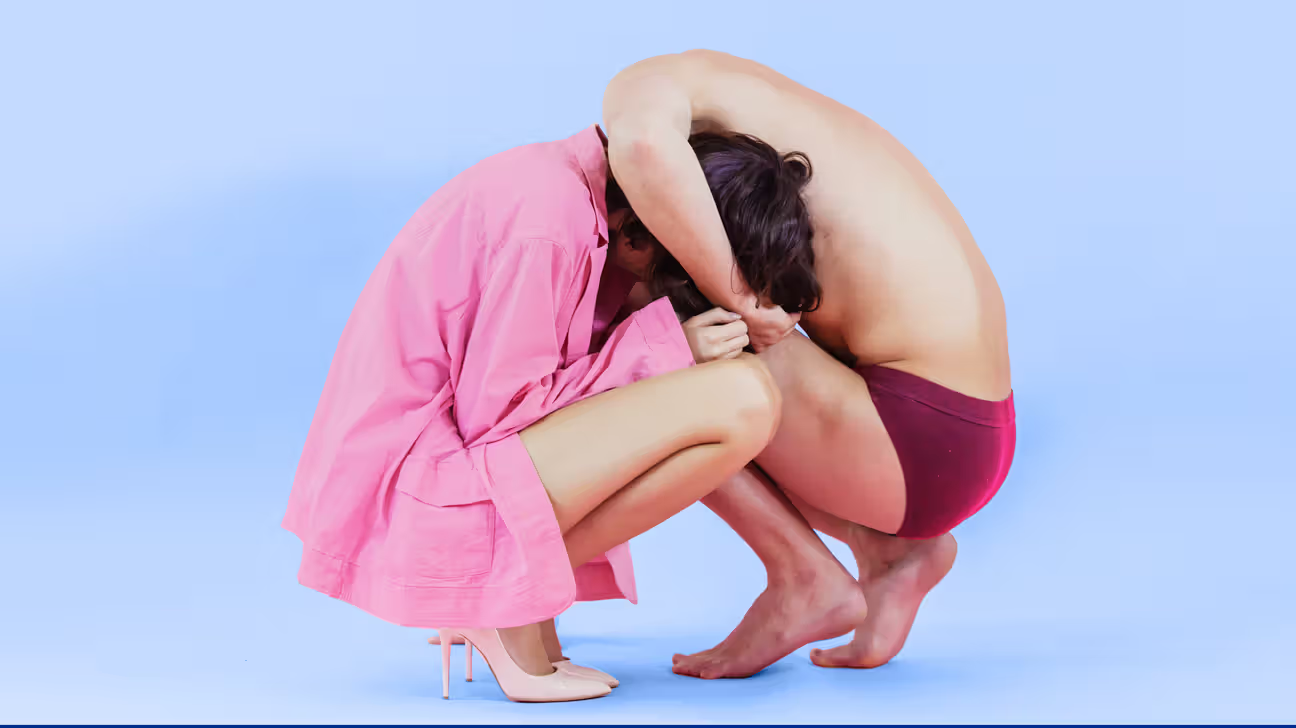
Picture the letter “T” on your mattress: the vertical bar is the receiver’s torso, head to toe; the horizontal bar is the top partner’s torso, perpendicular across the receiver’s hips. In practice, the top partner’s thighs bracket the receiver’s pelvis, while the receiver’s calves can rest against the top partner’s butt or lower back. Many illustrators draw a small gap between the torsos, but in real life the top partner’s chest often leans slightly forward, creating a diagonal rather than perfect right angle. This lean is useful: it lets the top partner kiss the receiver’s neck or breasts without losing alignment. If you need a mental shortcut, imagine “reverse cowgirl” turned on its side—except the bottom partner is flat, not propped on elbows. A quick GIF search on Refinery29’s “Sex Positions Club” series shows the T-Bone in motion, highlighting how little clearance is required compared with standing positions.
Key Benefits of the T-Bone Position for Couples
First, depth control: the downward angle shortens the canal, so even a shorter penis or toy can reach the anterior fornix or prostate without cervical bumping. Second, dual stimulation: the top partner’s pubic mound grinds against the receiver’s clitoris or perineum, turning penetration into a hybrid of riding and missionary. Third, eye contact flexibility: you can lock eyes by leaning forward or break gaze to focus on bodily sensations—helpful for people who feel self-conscious during prolonged staring. Fourth, stamina: both partners support their weight on thighs or elbows, reducing the quad burn common in cowgirl or doggy. Finally, the position is pregnancy-friendly past the first trimester: the receiver lies supine without a heavy torso compressing the vena cava, and pillows can tilt the uterus safely sideways, something the American College of Obstetricians and Gynecologists recommends for comfortable late-term sex.
T-Bone vs. Doggy Style: Differences and Similarities
Doggy style delivers posterior penetration with maximum hip mobility; T-Bone offers side-entry with tighter friction. In doggy, the receiver’s G-spot or prostate angles away from the penetrating shaft, so stimulation relies on upward curve or toy contour. In T-Bone, the downward thrust naturally grazes the front wall, making it easier to stimulate the G-spot without angling wrists. Both positions grant the penetrator a full-view of their own shaft and the receiver’s buttocks, but T-Bone adds frontal access to breasts, clitoris, or penis base—impossible in classic doggy. Noise level differs too: doggy can create loud hip-clap sounds, whereas T-Bone’s bodies stay mostly stacked, ideal for roommates or hotel thin walls. That said, lovers who crave the primal, hands-free pounding of doggy may find T-Bone too gentle; consider hybridizing by starting in doggy and rolling sideways into T-Bone for a blended climax sequence.
Enhancing Pleasure: Tips for Mastering the T-Bone
Lube is non-negotiable: the tight entry can create drag even when natural lubrication seems adequate. Choose a silicone-based formula for water-proof glide, but swap to water-based if toys contain silicone. Next, synchronize breath: the top partner inhales while pulling back, exhales while pressing forward; the receiver times pelvic-floor “tugs” on the exhale, amplifying friction. Add a vibrating cock ring: the vertical ring sits exactly over the receiver’s clitoris or perineum, turning every micro-thrust into a buzz. For prostate owners, slip a curved plug before entry; the T-Bone angle presses the plug’s bulb firmly against the gland with each downward stroke. Finally, play with temperature: a warmed glass dildo traced along the inner thigh during penetration heightens nerve response, a trick endorsed by sexologist Dr. Jess O’Reilly in her “Sex with Dr. Jess” podcast episode on temperature play.
Who Might Enjoy the T-Bone Position Most?
Couples managing mismatched heights love T-Bone because alignment depends on hip angle, not leg length. People with chronic knee pain who find cowgirl or doggy unbearable can stay flat and still enjoy deep penetration. If the receiver has a tilted uterus or experiences cervical pain during deep thrusts, the sideways tilt often bypasses the cervix entirely. Gay men seeking prostate contact without extreme contortion appreciate the downward curvature, especially when the top partner slightly rotates hips clockwise to “hook” onto the gland. Finally, edging enthusiasts—those who delay orgasm—benefit from the position’s micro-movement range; tiny rocking lets them hover at 9/10 arousal without the big thrusts that push them over, making T-Bone a favorite in orgasm-control workshops taught by the Kinsey Confidential team.
Anatomy and Mechanics: How the T-Bone Position Works
Biomechanically, the T-Bone creates a “closed-chain” hip moment: the receiver’s sacrum is fixed against the mattress, while the top partner’s femoral head glides in the acetabulum, producing a stable fulcrum. This stability allows the pubic symphysis of the top partner to compress the receiver’s mons pubis, stimulating the dorsal clitoral nerves that run under the labia majora. For penis owners, the downward erection angle—roughly 30–45 degrees below horizontal—mirrors the suspensory ligament’s natural range, reducing strain compared with upward angles in missionary. Meanwhile, the receiver’s hip tilt narrows the ischial tuberosity distance, shortening the vaginal or rectal canal by approximately 1–2 cm, measurable via pelvic MRI studies cited in the Journal of Sexual Medicine (2018). The result: deeper perceived penetration without extra length, explaining why many couples report “he feels bigger” in T-Bone even when no size change occurs.
Common Mistakes to Avoid in the T-Bone Position
Skipping pillow support is the #1 error; without under-hip lift, the top partner’s penis or toy aims at the tailbone instead of the G-spot, causing discomfort. Second, over-rotating: if the top partner turns more than 15 degrees past perpendicular, the shaft can torque painfully inside the canal. Third, neglecting the outside leg: the top partner’s dangling foot often goes numb, breaking rhythm—brace that foot flat against the mattress for endurance. Fourth, using too much lube: excess slip negates the friction that makes T-Bone special; apply a dime-sized amount and reapply only when sensation dulls. Finally, ignoring condom angle: roll the condom on while fully erect, then angle downward slowly; rushing can fold the rim, increasing breakage risk. Planned Parenthood’s condom guide notes that side-entry positions see 8 % higher slippage rates, so check fit after the first minute.
Variations and Modifications of the Classic T-Bone
Introduce the “Elevated T-Bone” by sliding a wedge under the receiver’s entire torso; the sharper tilt converts the downward thrust into near-vertical stroking, ideal for A-spot stimulation. Flip into “Reverse T-Bone” where the top partner faces the receiver’s feet—great for prostate owners who enjoy posterior pressure. Try “Double T-Bone” in a threesome: one penetrator lies sideways across the receiver’s hips, the second kneels orally at the receiver’s head, forming a mirrored T-shape. For pregnant bodies, place a yoga bolster lengthwise under the receiver’s left hip to create a 30-degree tilt; this keeps uterine weight off the inferior vena cava while maintaining penetration depth, a modification praised by the Mayo Clinic’s guide on third-trimester intimacy. Lastly, bondage lovers can strap the receiver’s wrists to the bed corners, turning the stable T-shape into an immobilized tease frame that still allows hip rocking.
Incorporating Toys and Accessories into the T-Bone
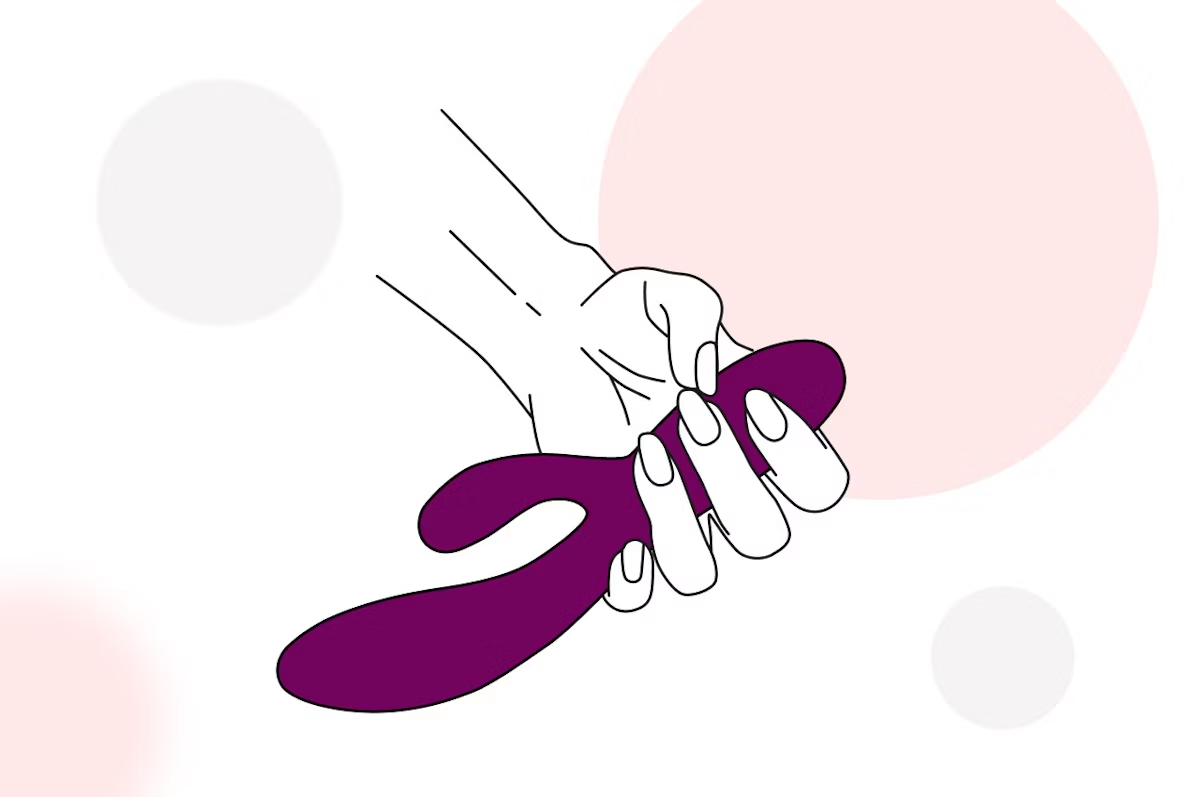
A slim wearable vibrator such as the We-Vibe Chorus fits snugly between the closed pelvises, delivering hands-free clitoral and penile vibration. Because T-Bone keeps the bodies tightly stacked, the toy stays pinned in place even during vigorous rocking. If you prefer anal add-ons, choose a plug with a T-bar base rather than a round one; the T-bar aligns parallel to the receiver’s crack, preventing the top partner’s thigh from jostling it loose. Cock rings with attached anal beads work exceptionally well: the beads angle posteriorly, following the natural tilt of the T-Bone. For temperature play, chill a stainless-steel wand and trace it along the receiver’s side boob or lower back while thrusting—the cool contrast amplifies nerve response without disrupting rhythm. Finally, consider a positioning strap: looping a Sportsheets Super Strap around the receiver’s waist gives the top partner a sturdy handle to pull them closer, deepening penetration without extra force on the lower back.
The T-Bone Position: Deep Penetration and Clitoral Stimulation
The magic lies in dual-plane contact: the shaft travels along the anterior vaginal wall while the pubic bone compresses the external clitoral glans. This simultaneous internal and external stimulation mirrors the “blended orgasm” pattern identified in a 2017 Indiana University survey where 64 % of women reported fastest climax when both clitoral and vaginal nerves fired together. In T-Bone, the top partner’s downward thrust naturally stretches the internal clitoral crura, which fork around the vaginal canal, while the external bulb stays pinned under the pubic mound. For receivers who need stronger external vibration, grind in small circles rather than linear thrusts; the circular motion drags the clitoral hood across the glans, replicating fingertip rubbing. If the receiver is on the edge but needs a final push, the top partner can lift their own hips two inches—this releases pressure, then slam back down, delivering a spike of sensation without changing angle.
Is the T-Bone Position Right for You? Considerations
Assess hip mobility: if either partner has severe acetabular impingement, the rotation required can trigger pain. Test by lying on the floor and rotating your top leg inward; if you feel a sharp pinch, skip T-Bone or use thick pillows to reduce rotation. Consider penis curvature: a pronounced upward curve may not align with the downward angle, causing uncomfortable bending inside the canal—reverse T-Bone often solves this. Evaluate emotional comfort: the side-facing alignment limits eye contact, which some lovers interpret as detached; schedule a check-in word like “eyes” to request a face-to-face lean when intimacy feels lacking. Finally, think about cleanup: the tight fit increases bodily fluid spread across both groins; keep unscented wipes bedside if you dislike sleeping in wet spots. When in doubt, try a clothed dry-hump rehearsal to gauge angles before full penetration.
Exploring the T-Bone: A Guide to Spicing Up Your Sex Life
Turn T-Bone into a sensory game: blindfold the receiver so every thrust feels magnified, then alternate hot-and-cold breaths along the neck. Introduce a flavored arousal gel on the nipples; the top partner can lick it off without dismounting. Schedule a “silent T-Bone” night where neither partner can speak—communication happens only through hip pulses and squeezed hands, heightening non-verbal attunement. Film yourselves from above: the T-shape looks striking on camera, and reviewing the footage later builds anticipation for round two. Swap roles with a strap-on: the partner who usually receives can experience the power of downward thrusting, balancing the erotic ledger. Finally, pair the position with audio erotica apps like Dipsea; the side-by-ear placement makes whispered stories feel immersive, turning T-Bone into a full-body narrative experience rather than just a physical angle.
Communication and Comfort in the T-Bone Position
Because faces aren’t aligned, use tactile safe words: three quick taps on the shoulder mean “pause,” a long squeeze means “pull out.” Establish a “hip safe” phrase—say “rotate”—to signal when the angle feels off; the top partner then lifts slightly and re-aligns. Check circulation every five minutes: the receiver wiggles toes, the top partner flexes their outside knee. If either feels tingling, shift weight or add cushions. Verbal feedback still matters: the top partner can lean forward so ears meet, whispering “faster,” “slower,” or “right there” without breaking rhythm. Post-play debrief boosts future sessions; discuss which micro-movements hit the spot and whether toy placement enhanced or distracted. A 2020 Archives of Sexual Behavior study found that couples who debriefed within 30 minutes of sex reported 23 % higher satisfaction the next encounter—proof that a two-minute T-Bone recap can pay long-term dividends.
Overcoming Challenges: Making the T-Bone Position Work for You
If depth feels too intense, place a folded towel between the receiver’s pelvis and the top partner’s pubic bone; the 1-cm buffer shortens thrust length without sacrificing clitoral pressure. For height disparities over 8 inches, the top partner can kneel on a firm cushion, equalizing hip levels. When lower-back pain flares, switch to “Lazy T-Bone”: both partners lie on their sides, maintaining the 90-degree angle but with torsos fully supported, reducing lumbar arch. If premature ejaculation is a concern, the top partner can perform shallow “half-thrusts” that stay inside the first third of the vagina or rectum, where nerve density is lower, helping them edge longer. Finally, if emotional disconnect creeps in, synchronize breathing: count four beats in as you rock back, four beats out as you press forward; within 60 seconds heart rates often align, releasing oxytocin that restores intimacy even without face-to-face contact.
The T-Bone Position in Context: A Modern Sex Technique
T-Bone has surged in Google Trends since 2021, correlating with increased searches for “low-impact sex” and “positions for bad knees.” Sex educators tout it as the antidote to performative, athletic porn poses, emphasizing pleasure over acrobatics. On TikTok, the hashtag #TBonePosition blends medical practicality with erotic flair, amassing 18 M views as users demo pillow hacks. The position also embodies contemporary shifts toward inclusive language: it works for any gender combo, needs no phallic size assumptions, and adapts to disability aids like wedges or straps. In a culture juggling pandemic stress and body positivity, T-Bone offers deep sensation without demanding perfect fitness, aligning with the broader “sexual wellness” movement that positions intimacy as self-care rather than spectacle. Try it once, and you’ll understand why the sideways T has become the quiet icon of 2020s pleasure—proof that sometimes the best angles in life are 90 degrees.