Introduction: Your Sexual Empowerment Journey Starts Here
Picture this: you’re in bed with someone you like, the lights are low, Spotify’s “Sexy Chill” playlist is purring … and your brain is stuck on “Am I doing this right?” or “Do I smell weird?” or “Will they ghost me if I ask to slow down?” If any of that rings a bell, congratulations—you’re human. The awkwardness isn’t a personal flaw; it’s a sign that nobody ever handed you the owner’s manual to your own body and desires. That manual has a title: Sexual Empowerment: What It Means and Practical Tips to Achieve It. Grab a coffee (or a glass of pinot), settle in, and let’s write that manual together—no shame, no jargon, just solid info and a few well-placed jokes.
What Sexual Empowerment Actually Is—And Isn’t
Let’s clear the fog. Sexual empowerment is NOT:
- A free pass to “Netflix-and-thrill” every night.
- Posting lingerie selfies unless you genuinely want to.
- Pretending you’re 100% confident 24/7 (even Beyoncé gets shy).
Rather, sexual empowerment is the sweet spot where knowledge, self-agency, and respect overlap. It means you can say “yes,” “no,” “maybe,” or “let’s use the blue vibrator and two pumps of lube” without feeling you just auditioned for America’s Next Top Acrobat. In short: informed choices, mutual respect, and the pursuit of pleasure—yours included.
Why Your Well-Being Depends on It
Still wondering if this is worth the hype? Consider the data. A 2021 Journal of Sexual Medicine meta-analysis found that people who report higher sexual autonomy also report higher self-esteem and lower symptoms of anxiety and depression. Translation: when you feel in charge of your sex life, your mental health gets a side-order of resilience. Add in safer sex practices (because confident folks use condoms and schedule STI screens) and you’ve got a recipe that protects both body and mind.
Foundation #1: Know Thy Body—Yes, That One
You can’t negotiate for pleasure if you don’t speak the language. Grab a mirror, a reliable anatomy diagram (Planned Parenthood’s website has great 3-D versions), and go full “David Attenborough” on yourself. Where do you tense? Where do you tingle? Track your cycle or erection patterns for a month. You’ll spot trends—like why you’re randier after leg day or why lube suddenly becomes non-negotiable around day 18. Knowledge is power, but it’s also lube for life’s gears.
Foundation #2: Curate Your Info Diet
Not all sex ed is created equal. If your last lesson featured a gym coach waving a banana at a condom, you deserve an upgrade. Bookmark these Western heavy-hitters:
- CDC Sexual Health—for STI stats & safer-sex cheat sheets.
- American Sexual Health Association—free brochures you can actually understand.
- Scarleteen—teen-friendly, but their “Sex Etiquette” guides work at any age.
- The Trevor Project—LGBTQ+ affirming mental-health resources.
Unfollow influencers whose “advice” smells like misogyny wrapped in coconut oil. Your brain will thank you.
Foundation #3: Map Your Desires & Boundaries
Think of boundaries as personal traffic lights: green = “more please,” yellow = “pause & check,” red = “absolutely not.” Jot them down when you’re calm, not when someone’s hand is already down your pants. Pro tip: frame desires positively (“I love slow, teasing touch”) rather than negatively (“don’t rush”). It’s easier for partners to remember “slow tease” than an ever-growing no-list.
Self-Empowerment Hacks You Can Try Tonight
1. Solo Date with Yourself
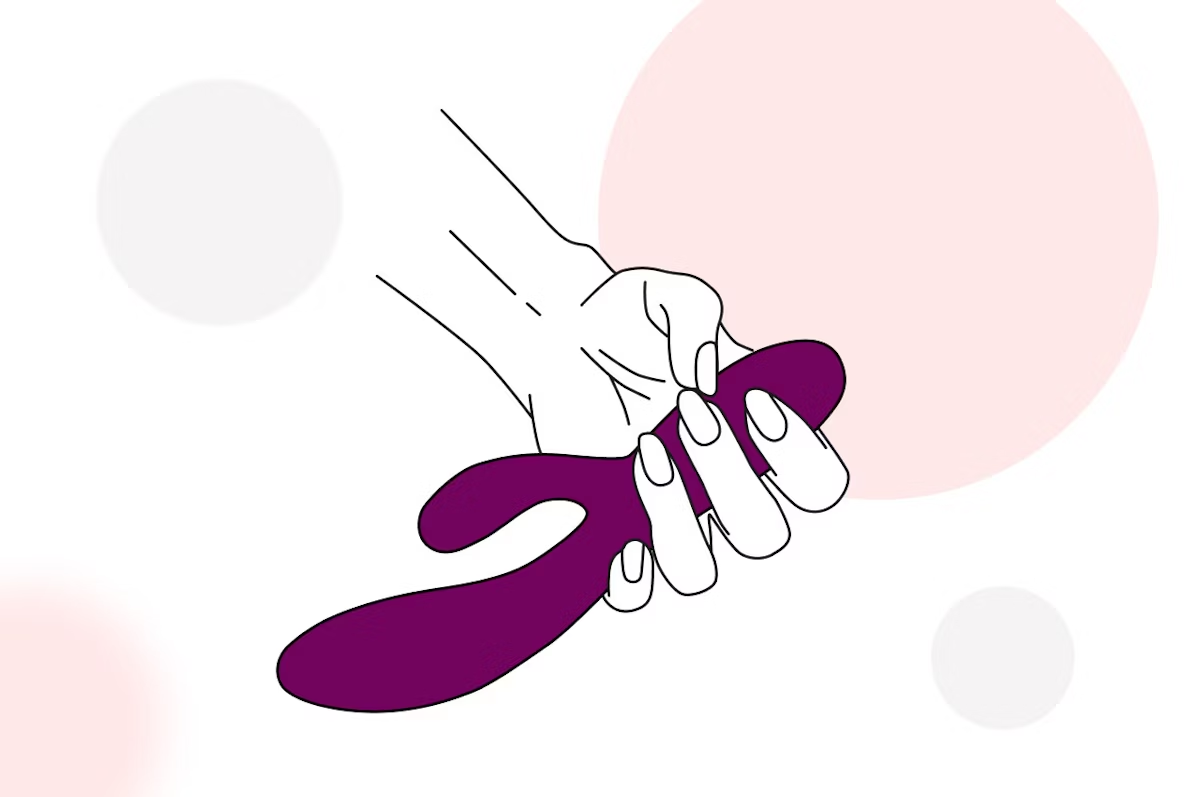
Pick a night, silence notifications, and treat masturbation like a spa treatment: candles, playlist, premium lube. Goal isn’t orgasm; it’s data. Notice pressure, rhythm, fantasies. Write three discoveries. File under “research.”
2. Mirror Mantra
After your shower, stand in front of the mirror and thank one body part for something non-aesthetic: “Thanks, thighs, for getting me up the subway stairs.” Body neutrality precedes body positivity—and it’s harder to hate a body you’re literally thanking.
3. Boundary Reps
Practice saying “That doesn’t work for me” in mundane settings—like sending back the wrong coffee order. The sentence becomes muscle memory, ready to deploy when stakes are higher than latte foam.
Relationship Power-Ups
1. The 3-Minute “I” Statement Drill
Sit clothed, knees touching, timer set. Each partner gets three minutes to finish prompts: “I love when …,” “I’m still nervous about …,” “I’d like to experiment with …” No interruptions, no rebuttals—just nods or “thank you for sharing.” Do it monthly; it’s like changing the oil on your communication engine.
2. Safer-Sex Huddle
Before clothes hit the floor, ask: “When were you last tested?” and “What barriers do we need?” Normalize it by keeping condoms/dental dams in the nightstand next to the earbuds—equally essential accessories.
3. Safe-Word ≠ Safe-Relationship
A safe word is great for kink, but everyday intimacy needs safe phrases too. Try “yellow” for “let’s pause and adjust” and “red” for “stop everything.” If your partner ignores the word, that’s data, not a “misunderstanding.”
Overcoming Roadblocks
Shame & Social Scripts
Notice the voice that says “Good girls don’t …” or “Real men should …” Ask: Whose script is that? Your grandma’s? Your high-school locker room? Write the belief on paper, then counter with evidence: “Good girls” apparently do pay their rent, adopt dogs, and sometimes own five vibrators. Shame hates scrutiny—shine a flashlight, watch it scuttle.
Trauma Aftershock
If touch triggers panic, your nervous system isn’t broken—it’s protecting you. A 2020 Johns Hopkins review showed trauma-informed therapy (especially EMDR and somatic approaches) significantly reduces sexual distress. Seek pros: Psychology Today’s therapist finder lets you filter for “sexual trauma” and “insurance.” You deserve tools, not just pep talks.
Cultural & Personal Customization
Maybe your faith celebrates abstinence until marriage; maybe your family expects grandkids by 28. Sexual empowerment still applies—because it’s about choice, not check-boxes. You can be celibate and empowered (clear decision) or kinky and empowered (clear consent). The common denominator is that the decision feels internally generated, not externally imposed.
Quick-Fire FAQ
Q: Does empowerment mean I have to try everything?
A: Nope. It means you can say “hard pass” without spiraling into FOMO.
Q: I’m shy—how do I start talking?
A: Text first. “I read something interesting about [X]—curious how you feel?” Typing removes eye contact pressure.
Q: Healthy vs. harmful exploration?
A: Healthy = consensual, pre-negotiated, after-care planned. Harmful = violates your own boundaries, leaves you depleted or scared.
Q: Partner feels threatened?
A: Frame as team upgrade: “I want us to feel even better together.” Invite them to share desires too—empowerment is contagious when no one’s keeping score.
Q: Best unbiased sex-ed sites?
A: Go Ask Alice (Columbia U), OMGYes (pleasure science), and the NHS “Sex & Relationships” pages. Triple threat of accuracy, inclusivity, and readability.
Further Reading & Resources
Books:
- Come As You Are by Emily Nagoski—science-made-fun on arousal and desire.
- The Guide to Getting It On by Paul Joannides—encyclopedic, illustrated, and actually hilarious.
- Bodies by Sarah Perry—if you need poetic inspiration to love your flesh.
Professional Help:
American Association of Sexuality Educators, Counselors & Therapists (AASECT) has a “Find a Therapist” portal. Filter by zip code, insurance, and specialties like “kink-aware” or “Christian sex therapy.” Hotlines: RAINN (800-656-HOPE) for sexual assault, and Love is Respect (text LOVEIS to 866-331-9474) for relationship abuse.
Closing Thoughts: Keep the Conversation Going
Sexual empowerment isn’t a finish line; it’s a winding trail with scenic overlooks and occasional potholes. Some days you’ll feel like a sultry deity, other days like a damp sock—that’s normal. Pack patience, lube, and curiosity. Re-read this guide in six months and notice how your highlights change. Wherever you are, the mere act of asking, “What do I want, and what do I need to feel safe getting it?” places you squarely on the path. Safe travels, happy exploring, and remember: your “yes” is gold—spend it proudly.