I.What is the Shoulder Holder Position?
Picture the moment when a sweaty rom-com couple finally gives in to chemistry: one partner scoops the other up, legs instinctively wrap around shoulders, and—against a wall, over a kitchen counter, or right there on the living-room rug—they go from zero to “how did we even get here?” That cinematic flourish is the Shoulder Holder in a nutshell: a standing, hips-above-heart configuration that looks equal parts Cirque du Soleil and “let’s break the bed… except there is no bed.”
Why bother? Because when it’s done right, the position offers some of the deepest penetration two bodies can achieve, plus a turbo-charged hit of eye-to-eye intimacy and a dash of “did we just become superheroes?” novelty. This guide is your no-blush, safety-first playbook for turning that Hollywood moment into a repeatable, mutually mind-blowing experience—without pulling a hamstring or bruising an ego.
II. Position Definition & Key Features
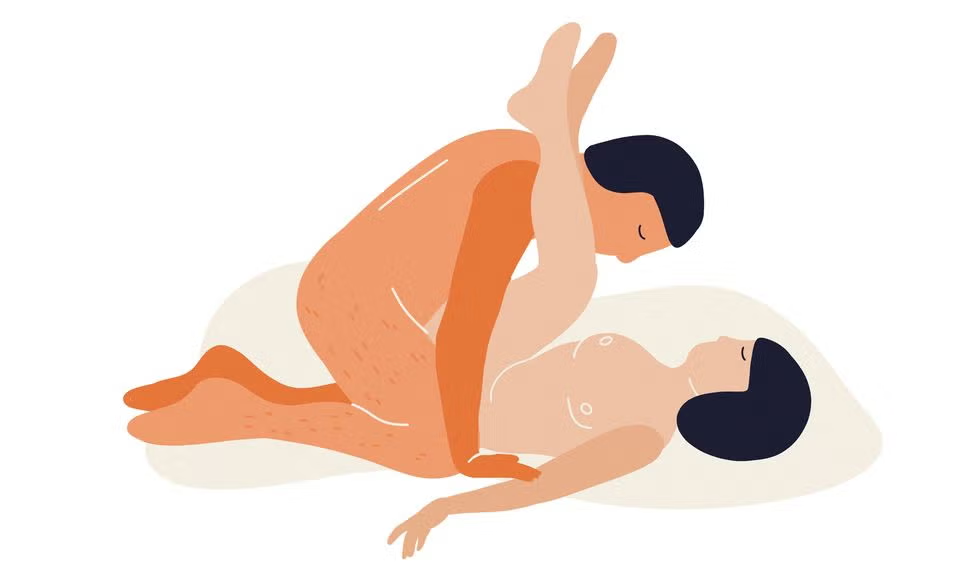
What Exactly is the Shoulder Holder? It’s a standing face-to-face pose where the receiving partner’s hips are lifted to roughly the giver’s shoulder level, legs draped over (or alongside) the giver’s shoulders. The giver supports the receiver’s weight by cradling the lower back or upper glutes while thrusting or grinding. Think of it as a hybrid between the “standing carry” and the “wheelbarrow,” but with the receiver’s torso angled upward instead of parallel to the floor.
Visual and Physical Characteristics: The receiver’s spine forms a gentle C-curve; the giver’s arms act like a human shelf; both partners share the balance load—one through core tension, the other through thigh-grip and ankle-lock. The angle tilts the receiver’s pelvis, shortening the anterior vaginal or rectal wall and making every inch of stimulation feel amplified.
How It Differs from Similar Positions: Unlike a classic standing carry (where legs wrap around the giver’s waist), the Shoulder Holder elevates the hips higher, shifting pressure toward the front wall of the vagina or rectum—hello, G-spot or P-spot. Compared with a modified cowgirl, control flips: the giver steers tempo and depth, while the receiver controls grip and angle via leg tension. Translation: you get the dominance vibe of missionary plus the depth potential of doggy, all while upright.
III. Step-by-Step Execution Guide
Prerequisites & Preparation:
- Warm-up: 5 minutes of dynamic hip circles, cat-cow stretches, and shoulder rolls reduce injury risk, says the Mayo Clinic.
- Lube: friction is your enemy when bodies hover at odd angles. A silicone-based lube stays slick even under water (shower sex, anyone?).
- Setting: clear a 4×4-foot space, lock pets out, and set a non-slip mat or folded yoga blanket underfoot.
Step 1: The Starting Position
Receiver: stand facing your partner, feet hip-width apart. Giver: step in close, feet staggered for stability (one foot slightly forward, knees soft).
Step 2: The Lift – Safe Technique for the Giver
Bend knees, hinge at hips, and slide hands under the receiver’s glutes—not the thighs, which forces a weaker grip. Engage core and drive through heels (think dead-lift form). As the receiver’s weight settles, straighten legs while drawing their hips toward your chest.
Step 3: Positioning & Support for the Receiver
Once airborne, the receiver places heels on the giver’s shoulder blades or upper traps (not the neck—cervical ouch). Cross ankles loosely to create a locked “sling.” Arms can grip the giver’s biceps for balance or reach overhead for extra stretch and visual drama.
Step 4: Achieving Penetration and Finding Rhythm
Micro-bend the giver’s knees so pelvises align. Insert gradually; small hip pulses beat wide thrusts when balance is shaky. Start with a 2-inch range of motion, then expand as equilibrium improves. The receiver can tilt hips—think scooping a hammock—to fine-tune pressure on hot spots.
Step 5: Safe Exit Strategies
Agree on a two-word safe phrase like “heels down.” On cue, the giver bends knees and lowers the receiver’s glutes onto a sturdy surface (bed edge, sofa arm) before letting go completely. Never dump forward; that’s how noses meet floors.
IV. What to Expect: Sensations & Experience for Both Partners
For the Receiver (Being Held):
Physical: Expect a “full-up” sensation—gravity plus angle equals depth that can feel borderline overwhelming in the best way. The anterior wall gets consistent pressure, making G-spot or prostate stimulation almost unavoidable. Suspension adds a weightless, roller-coaster flip to your stomach.
Psychological: Vulnerability dialed to 11. You’re literally in someone’s hands, so trust surges; adrenaline follows. Many receivers report a subspace-lite calm once rhythm locks in.
For the Giver (Holding):
Physical: Quads and glutes burn like a barre class, but the visual payoff—partner’s torso arched, breasts or chest elevated, facial expressions on HD display—amps arousal. Penetration angle feels tighter because the receiver’s entrance is compressed by leg position.
Psychological: Instant dominance upgrade. Supporting another human safely taps primal “protector” circuits, flooding the brain with dopamine and oxytocin, the same duet released during long hugs, per Healthline’s explainer on bonding hormones.
Primary Types of Stimulation: Deep pressure, anterior-wall stroking, and simultaneous clitoral or scrotal contact if the giver rocks forward. Bonus: shallow penetration teases the vaginal opening or external anal nerves, a hotspot dense with sensory fibers.
V. Benefits & Potential Challenges
Key Benefits:
- Depth & Angles: The 45-degree hip tilt shortens the canal/proximal rectum, making every thrust feel “bottoming out” without actual cervical pounding.
- Visual Intimacy: Nothing between you but sweat beads; perfect for eye-gazers and dirty-talk enthusiasts.
- Novelty Points: According to a New York Times roundup on sexual novelty, new experiences raise dopamine, rekindling early-relationship butterflies.
Potential Challenges:
- Strength Tax: Equivalent to a front-loaded squat plus front raise. Average duration? 45–90 seconds for beginners, up to 3–4 minutes for gym-regulars.
- Flexibility: Tight hamstrings limit how high hips can go. Dynamic stretching helps.
- Balance: Blood-rush to the receiver’s head can cause mild dizziness—keep sessions short the first few tries.
- Strain Risk: A 2022 Journal of Sexual Medicine study notes lower-back injuries spike in standing positions; engage core and avoid twisting.
- Size Mismatch: A 100-lb height/weight difference isn’t a deal-breaker, but you’ll need furniture assist (see Section VI).
VI. Safety Tips & Techniques for Success
Foundational Safety: The NHS guide on posture recommends keeping a neutral spine and “power zone” lift (elbows bent 90°, load close to torso). Apply the same rule here.
Grip & Support: Spread fingers under the gluteal fold—flesh handles better than fabric. If palms slip, wear weight-lifting gloves or use a yoga strap under the receiver’s hips, ends held taut like suitcase handles.
Neck & Spine Protection: Receiver: keep a fist-width gap between neck and any wall to avoid whiplash. Giver: shrug shoulders slightly upward to create a natural shelf, preventing the receiver’s calves from sliding onto your neck.
Back & Joint Care: Avoid hyper-extension by tucking the tailbone. Imagine zipping up tight jeans—core on, pelvis neutral.
Environmental Support: A solid doorframe or kitchen counter lets the receiver rest 20–30% of bodyweight, cutting load dramatically. Slip-proof yoga mat under the giver’s feet equals instant stability upgrade.
Communication & Safe Words: Use the traffic-light system: “Green” = more, “Yellow” = adjust, “Red” = stop. Non-verbal option: three quick taps anywhere = “set me down.”
When Fatigue Hits: Giver: lean receiver onto the nearest surface, step back, and flex quads to restore blood flow. Receiver: hug your knees to chest to ease lower-back arch.
VII. Suitability & Partner Communication
Is This Position Right for You? If you can each hold a plank for 30 seconds and squat to chair height without knee pain, you’re cleared for take-off. Chronic back issues, vertigo, or recent abdominal surgery? Skip or modify heavily.
The Pre-Attempt Conversation: Swap fantasies first: “I love the idea of you holding me up… but I’m scared I’ll feel too heavy.” Normalize the fear—everyone worries they’ll drop or be dropped. Agree on a trial run fully clothed to test grip and comfort.
Trust & Pressure-Free Vibe: Frame it as play, not performance. If it fails, you’ve still created inside-joke material. Keep the mood light: laugh, kiss, pivot to a tried-and-true position without apology.
Graceful Abort: “Let’s slide you onto the counter and keep the angle” keeps momentum alive while sparing egos.
VIII. Frequently Asked Questions (FAQs)
Q1: How much strength does the giver realistically need?
Enough to front-squat roughly 60% of the receiver’s bodyweight. If that’s not in your wheelhouse yet, start with wall-supported half-lifts and hit the squat rack twice a week.
Q2: Are there easier variations to try first?
Yes: the “Lazy Shoulder Holder” has the receiver sit on a tall table or washing machine; the giver stands, lifts only the hips, and thrusts. You get the angle without the CrossFit audition.
Q3: How does it feel different for vulva-owners vs. penis-owners receiving?
Vulva-owners often feel anterior-wall (G-spot) pressure plus indirect clitoral grind. Penis-owners enjoy prostate nudging and external scrotal contact against the giver’s abdomen.
Q4: How long can you typically maintain this position?
Beginners: 30–90 seconds. Intermediate: 2–3 minutes. Advanced: until cardio taps out—usually 5 minutes max. Switch before form falters.
Q5: Any specific advice on using lubricant for this position?
Silicone lube resists sweat; apply 2–3 drops to the giver’s pubic bone and receiver’s inner thighs to reduce skin drag. Reapply if you migrate to the shower—water rinses even silicone eventually.
Q6: What if we can’t achieve or maintain the full “hold”?
Downgrade to a half-lift: receiver’s upper back rests on a bed while hips stay elevated. You keep the angle, ditch the dead-lift.
Q7: Is this position safe during pregnancy?
Generally no after the first trimester: the inverted angle plus abdominal pressure can risk blood pressure swings. Always clear athletic sex with your OB; ACOG guidelines advise against activities requiring prolonged Valsalva (bearing-down) maneuvers.
IX. Conclusion & Final Thoughts
The Shoulder Holder sex position is the sexual equivalent of espresso—short, intense, and guaranteed to jolt your routine. It demands muscle, trust, and a sense of humor, but the payoff—eye-watering depth, hormone-spiked intimacy, and bragging rights at the gym—is worth the rehearsal. Warm up, lube up, chat it up, and remember: the goal isn’t to nail the pose; it’s to nail the connection. If you wind up giggling in a heap on the floor, congratulations—you’re doing sex exactly right.
X. References & Further Reading
Mayo Clinic Staff. “Stretching: Focus on Flexibility.” Mayo Clinic, 2022.
Raypole, Crystal. “Oxytocin and Dopamine: The Love Chemicals.” Healthline, 2023.
Parker-Pope, Tara. “How Sexual Novelty Can Strengthen a Relationship.” The New York Times, 2021.
NHS. “Common Posture Mistakes and Fixes.” National Health Service, UK, 2021.
The American College of Obstetricians and Gynecologists. “Exercise During Pregnancy.” ACOG, 2023.
Need more? Dip into Come As You Are by Emily Nagoski for arousal science, or browse Scarleteen’s interactive guides on communication and consent. Happy lifting—and shifting!