So you typed “Ultimate Guide to Dick Piercings: Types, Pain & Aftercare” into the search bar at 2 a.m.—welcome, friend, you’re in the right place. Whether you’re chasing extra sensation, a visual thrill, or just the bragging rights that come with titanium in your trousers, this guide is the no-BS roadmap you need. We’ll unpack every major style, how much it’s going to hurt (spoiler: less than you think), and the exact aftercare tricks that keep things pretty and infection-free. None of this replaces a licensed, experienced piercer—think of this article as the savvy buddy who preps you before the real pro does the deed.
1. Types of Penis Piercings
Genital piercings are like craft beers: dozens of variations, each with its own “finish.” Below are the crowd-pleasers, grouped by real-estate location.
1.1 Glans Piercings
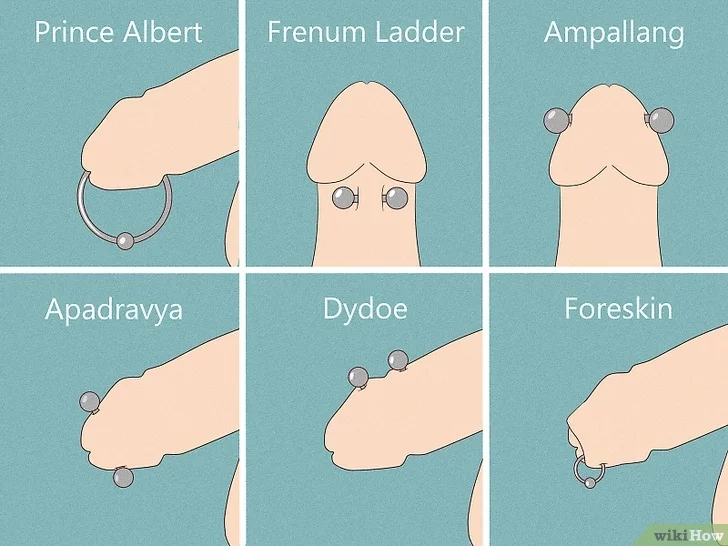
Prince Albert (PA): A single canal—urethra to underside—finished with a ring or curved barbell. Healing is speedy (4-8 weeks) and stimulation is high.
Reverse Prince Albert: Exits through the top of the glans instead. Slightly longer heal time; jewelry often a curved bar.
Apadravya: The “north-to-south” barbell through the entire glans. Universally touted by partners for extra G-spot contact.
Ampallang: East-to-west horizontal bar. More tissue, so expect a 5-6 out of 10 on the pain scale and 4-6 months of healing.
1.2 Shaft and Foreskin Piercings
Frenum: Pinches the thin web on the underside—think of it as the earlobe of genital work: easy, quick, and great for ladder builds.
Lorum: Lower-frenum, basically where shaft meets scrotum. Minimal pain, 6-8 week heal.
Hafada (scrotal side): Surface-style ring sitting along the shaft’s base; mostly decorative.
1.3 Head and Rim Piercings
Dydoe: Paired studs through the coronal ridge. Requires a pronounced ridge; reputed to add “ribbed” sensation for partners.
1.4 Perineum and Scrotal Fun
Guiche: Horizontal barbell behind the scrotum, on the perineum. Sitting bikes can be awkward for weeks—plan accordingly.
Scrotal Ladder: A vertical parade of rings along the midline; heals piecemeal so you can add rungs over time.
1.5 Pubic Piercing
Sits at the top of the penile base, where the shaft meets the pubic mound—think of it as a subtle reveal that only shows when you’re nude.
1.6 Visual Guide/Diagram
Check the interactive placement chart we’ve linked here courtesy of the Association of Professional Piercers. Pinch-to-zoom without embarrassment.
2. Pain Levels & What to Expect
2.1 Factors Influencing Pain
Your anatomy, the piercer’s hand speed, and whether you’ve slept or chugged three coffees all tweak the dial. A relaxed client plus a skilled piercer equals a sub-5-second procedure.
2.2 Comparative Pain Scale
- Frenum/Lorum: 3/10—like a firm finger-snap.
- PA: 4/10—quick sting, then warmth.
- Dydoe: 5/10—crunchier because of denser cartilage.
- Apadravya: 6-7/10—two punches, but over fast.
- Guiche: 5/10 plus a weird “tugging” vibe.
2.3 Sensation Description
Expect a deep pressure, a “pop,” and an immediate heat rush. By the time you form a coherent sentence, the jewelry is already in.
2.4 Managing Anxiety
Box-breathing (inhale 4, hold 4, exhale 4) drops heart rate in under a minute. Bring earbuds and your hype playlist—studies in music-therapy research show 20-30% drops in perceived pain when you control the soundtrack.
3. Healing Process & Timeline
3.1 General Healing Stages
- Inflammatory (Days 1-7): Swelling, reddish plasma ooze—totally normal.
- Proliferative (Weeks 2-6): Tissue knits; jewelry loosens slightly.
- Remodeling (Months 2-12): Collagen reorganizes; piercing strengthens.
3.2 Piercing-Specific Durations
Frenum: 4-6 weeks. PA: 4-8 weeks. Apadravya: 4-6 months. Ampallang: 4-6 months. Guiche: 8-12 weeks. Your mileage varies if you’re a cyclist, runner, or serial coffee drowner.
3.3 Normal vs. Problematic
Clear crusties = good. Thick green pus, red streaking, or fever = see a clinician, stat.
4. Detailed Aftercare Instructions
4.1 Initial Care (First 24-48 h)
Skip the gym, Netflix-and-chill only. Wear breathable cotton briefs or go commando under loose sweats. Ice pack wrapped in clean paper towel, 10 min on/10 min off, reduces swelling faster than you can say “frozen peas.”
4.2 Cleaning Routine
Saline soak twice daily: ¼ tsp non-iodized sea salt dissolved in 1 cup (240 ml) warm distilled water. Invert a clean shot glass over the area for 5 minutes—no cotton swab snagging required. Rinse in the shower to remove salt residue.
4.3 Product Hit List
Recommended: Sterile saline, plain water, mild fragrance-free body wash.
Forbidden: Alcohol, hydrogen peroxide, antibiotic ointments (they trap bacteria and turn your piercing into a gooey mess).
4.4 Lifestyle Adjustments
Clothing: Switch to soft modal or bamboo undies—less friction than lace or polyester.
Sex: Wait until swelling subsides and then use condoms for the first month even if you’re fluid-bonded; it keeps bacteria and bodily fluids in check.
Exercise: Light cardio after 72 h, but no spin class for guiche or scrotal work until week 4.
4.5 Handling Common Issues
Crusties? Soak, don’t pick. Lymph fluid crust acts as nature’s Band-Aid. Minor swelling after a wild night? Cold compress and an over-the-counter NSAID like ibuprofen do the trick.
5. Potential Risks and Complications
5.1 Short-Term
Infection rates sit around 2-5% when aftercare is followed, according to CDC data on body-art related infections. Excessive bleeding usually stops within minutes; if not, direct pressure for 10 minutes, no peeking.
5.2 Long-Term
Migration or rejection is more common in surface placements like guiche. Scar tissue can be minimized with silicone gel once healed. Urethral damage from a badly placed PA is vanishingly rare—emphasis on “badly placed,” so vet your piercer.
5.3 Allergic Reactions
Itchy, flaky skin around the jewelry? You might be that 10% of the population sensitive to nickel. Swap to implant-grade titanium (ASTM F-136) or solid 14k gold.
5.4 Red Flags
Pus, spreading redness, fever >100.4 °F (38 °C), or jewelry embedding into skin—urgent care time. Bring a friend; moral support is underrated.
6. Jewelry 101: Selection, Materials, and Sizing
6.1 Initial Styles
Captive bead rings for PA and guiche; straight or curved barbells for apadravya/ampallang; barbells or micro-curved bars for frenum and dydoe.
6.2 Body-Safe Materials
- Implant-grade titanium (lightweight, MRI-safe)
- Solid niobium (anodizable purplish hues)
- Biocompatible polymers (for temporary medical procedures)
6.3 Sizing
Gauge: most start at 10g (2.4 mm) or 8g (3 mm) to prevent the “cheese-cutter” effect. Length/diameter is anatomy-dependent; a reputable piercer stocks multiple sizes and measures on the spot.
6.4 Changing Jewelry
Wait until full healing, then use titanium insertion taper and water-based lube. Hot shower first to soften tissue. If resistance hurts, abort mission and visit your piercer—ego-free.
7. Finding a Reputable Piercer and The Procedure
7.1 Research & Vetting
Check the APP member directory; members must use sterile single-use needles and implant-grade jewelry. Scroll Instagram portfolios for healed photos—if all you see are fresh, swollen piercings, swipe left.
7.2 Key Questions
- “Do you autoclave your tools and keep spore-test logs?” (Answer must be yes.)
- “What’s your policy if I experience complications?” (Free check-ups = green flag.)
7.3 Studio Hygiene
Look for a tidy, scent-free workspace, packaged needles cracked open in front of you, and a piercer who glovestouches only your skin and sterile gear—no phones, no doorknobs.
7.4 Step-by-Step Appointment
- Consultation & anatomy assessment
- Jewelry selection & sterilization
- Skin prep with surgical scrub
- Placement marking—triple-check the mirror
- Breath in, needle through, jewelry inserted
- Aftercare briefing and written handout
8. Long-Term Care and Lifestyle Considerations
8.1 Daily/Weekly Maintenance
Healed piercings love a quick saline rinse in the shower once or twice a week. Think of it as flossing for your junk—30 seconds prevents 30 minutes of trouble.
8.2 Sexual Activity
Condoms can catch jewelry edges; try ultra-thin polyisoprene versions. Communicate with partners—some love the added friction, others need warming up. Remove jewelry only if fully healed and if the piercing is easily reversible (PA yes, apadravya no).
8.3 Jewelry Checks
Every month, tighten threaded ends with clean gloves. Replace worn O-rings on captive beads; they fatigue like old rubber bands.
8.4 Anatomical Effects
PA can sometimes create a second urinary stream; angle adjustment or sitting pee solves it. Ampallang may alter condom fit—size up if you feel tightness.
9. Frequently Asked Questions (FAQ)
Q1: Most popular/least painful?
Frenum wins both categories—easy to heal, easy to hide.
Q2: Can I get hard during piercing?
Happens more than you’d think. Pros ignore it; you should too.
Q3: Sex wait time?
Minimum two weeks for superficial piercings, 4-6 weeks for deeper ones—condom mandatory first month.
Q4: Affect urination?
PA can split the stream; turn the ring 90° or sit. Others have no effect.
Q5: Enhance pleasure?
Journal of Sexual Medicine surveys show 60-80% of pierced men report increased sensation; partners of PA and apadravya wearers often report greater stimulation.
Q6: MRI safe?
Implant-grade titanium and niobium are non-ferrous; still inform the tech—they may want a visual check.
Q7: Surgery?
Most hospitals require metal removal. Keep a non-metallic retainer (bioplast or PTFE) handy for emergencies.
10. Conclusion
Metal downstairs can be a thrill, a fashion flex, or a secret confidence boost—provided you respect the holy trinity: research, professional piercing, and relentless aftercare. Read, ask, vet, and clean like your sex life depends on it—because it kind of does. Armed with this Ultimate Guide to Dick Piercings: Types, Pain & Aftercare, you’re ready to make an informed, empowered decision. Go forth and decorate—responsibly.
Resources and Further Reading
- Association of Professional Piercers – aftercare brochures and member search
- Mayo Clinic: Piercings – How to prevent complications
- NHS Sexual Health Portal – STI prevention when resuming sex
- Healthline Body Modification section – peer-reviewed articles on healing