Medical Disclaimer: This article is for informational purposes only and is not a substitute for professional medical advice, diagnosis, or treatment. Always seek the advice of your physician or other qualified health provider with any questions you may have regarding a medical condition.
Introduction: Prioritizing Safety and Pleasure
We’ve all seen that steamy scene in a Netflix rom-com where partners pull off a wild, gravity-defying sex position without a single stumble, back tweak, or accidental knock-over of the side table full of your expensive soy candles. Spoiler: that’s Hollywood, not real life. Intimacy is supposed to be fun, connected, and completely free of post-hookup trips to urgent care for a pulled hamstring or bruised tailbone. This guide isn’t here to kink-shame or rain on your adventurous parade: it’s here to break down the anatomy behind risky positions, help you spot red flags before you get hurt, and share easy tweaks so you can explore comfortably with your partner. Remember: every body is different, and open communication is always the sexiest accessory you can bring to the bedroom.
Understanding the Risks: Anatomy and Biomechanics of Injury
Sex is a physical activity, just like hiking or playing pickleball, and it comes with the same risk of strains and sprains if you don’t pay attention to your body’s limits. Let’s break down why injuries happen, without the boring med school jargon.
The Anatomical Vulnerabilities: How Pain Occurs
First, spinal stress: hunching, arching too far, or twisting your neck or lower back at a weird angle for 10+ minutes puts the same kind of pressure on your spine as lifting a heavy grocery bag with a twisted torso. Next, joint overextension: pushing your hips, knees, or shoulders past their normal range of motion is a surefire way to end up with a sprain that makes walking your dog the next day miserable. Muscle and ligament strains happen when you stretch suddenly without warming up, just like if you tried to sprint a 5K right after rolling out of bed. Finally, insufficient lubrication causes painful friction and tiny microtears in sensitive tissue, which can lead to irritation and even infection later on, per The American College of Obstetricians and Gynecologists (ACOG).
Common Types of Pain and Potential Injuries
Acute pain is the most common: think a pulled hamstring or twisted wrist that hurts right away. Nerve impingement shows up as tingling or numbness, like if your arm falls asleep mid-position and you can’t feel your hand for 10 minutes after. Ignore small, consistent pains long enough, and you can end up with chronic repetitive strain injuries, like ongoing lower back pain that flares up every time you try a new position.
Heightened Risks for Specific Individuals
Some people are more prone to these injuries: if you have pre-existing arthritis, chronic back pain, or limited mobility, positions that require extreme flexibility are way riskier for you. If you’re recovering from surgery (especially hip, back, or pelvic surgery), always check with your doctor before trying new intimate positions.
The Top 8 Risky Positions: Analysis and Mechanisms
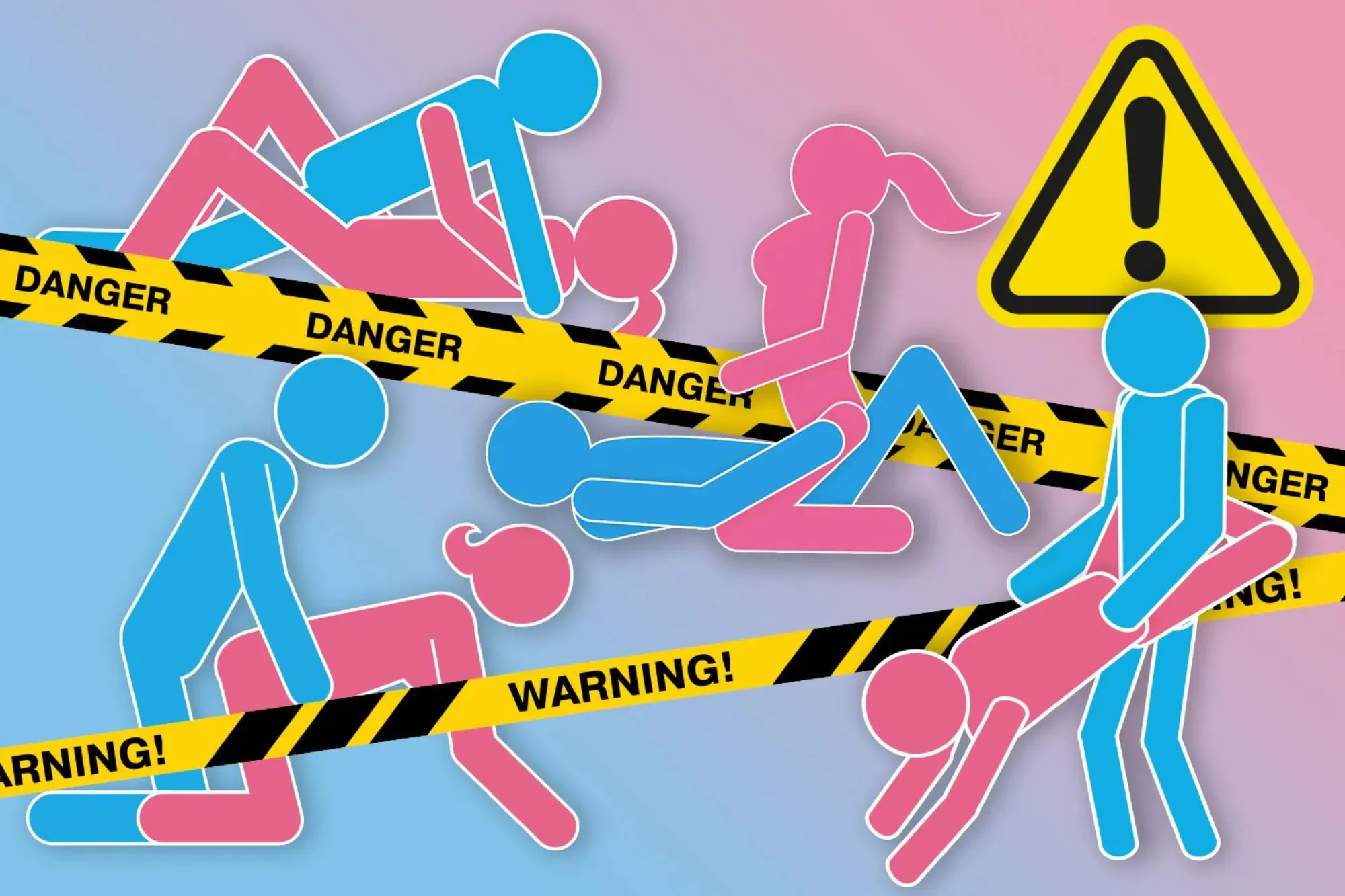
These positions are the most common culprits of sex-related injuries, per data from sexual health clinics across the U.S. and UK. We’re not saying you can never try them, but it’s important to know their risks first:
1. The Standing Lift
What it is: One partner lifts the other fully off the ground, usually with their legs wrapped around the lifter’s waist. Risks: Extreme lower back and shoulder load for the lifter, especially if you’re not used to lifting 100+ pounds of wiggling human. Slippery floors or unsteady footing can also lead to falls that send both of you to the ER. The Mayo Clinic lists back strains from this position as one of the most common sex-related injuries they see in urgent care.
2. Reverse Cowgirl with Deep Arch
What it is: The receiving partner straddles the giving partner, facing away, and arches their back as far as possible for deeper penetration. Risks: The Urology Care Foundation notes that nearly half of all penile fracture cases happen in this position: if the penis slips out and bends sharply against the partner’s pubic bone, it can cause a painful tear that requires surgery. The receiving partner also faces major knee strain from holding that squat position for too long.
3. The Plow (Extreme Leg-Over-Head)
What it is: The receiving partner lies on their back while their legs are pushed all the way over their head, almost touching the surface behind them. Risks: Severe cervical spine compression that can lead to neck stiffness, pinched nerves, or even more serious neck injuries if you move suddenly. It also restricts your breathing, since your chest is crunched inward.
4. The Wheelbarrow
What it is: The receiving partner holds themselves up on their hands while the giving partner holds their legs off the ground, like you would for a wheelbarrow race as a kid. Risks: Massive wrist and shoulder strain, especially if you have carpal tunnel or weak upper body strength. Balance is also tricky: one wrong move and you’re face-planting into the mattress (or worse, the floor).
5. Sitting on the Edge Without Support
What it is: The receiving partner sits on the edge of a hard bed, counter, or table with no cushioning, while the giving partner stands in front of them. Risks: Direct impact on the tailbone (coccyx) that can leave you wincing every time you sit down for a week. The partner sitting is also at risk of slipping off the edge if the surface is slippery.
6. Twisted Cross-Body Positions
What it is: Any position where your hips and spine are twisted sharply away from each other, like if you’re lying on your side but your torso is twisted to face your partner. Risks: Torque on the spine and hips that can throw out your lower back in seconds, the same way twisting to pick up a heavy laundry basket can leave you laid up for days.
7. The Pretzel (Overly Complex Poses)
What it is: Any position that requires 5 minutes of awkward wiggling and contorting to get into, with multiple limbs crossed or bent at extreme angles. Risks: General muscle strain all over your body, plus loss of control that can lead to awkward, forceful impacts that cause injury. Let’s be real: if you’re spending more time figuring out the pose than enjoying yourself, it’s not worth it.
8. Fast & Deep Positions Without Warm-Up
What it is: Jumping straight into fast, deep penetration without any slow build-up or foreplay, regardless of the position you’re in. Risks: Tissue trauma and microtears for the receiving partner, plus cervical collision pain that feels like a sharp cramp in your lower abdomen. Even the most low-impact position becomes risky if you skip warm-up.
Foundational Principles for Injury Prevention
You don’t have to give up adventurous sex to stay safe: just follow these simple rules:
Listening to Your Body: Non-Negotiable Stop Signals
If something hurts, stop immediately. There’s no award for “toughing through” pain, and pushing through will only lead to worse injury later. Discomfort that lingers for more than 10 seconds after you adjust position is a red flag.
The Central Role of Communication and Mutual Adjustment
Check in with your partner constantly: simple questions like “Does this feel okay?” or “Can we adjust the angle?” go a long way. Use a safe word if you’re exploring more intense play, so either of you can pause at any time without awkwardness.
Essential Preparation: Warm-up, Lubrication, and Environment
Foreplay is your warm-up: it gets blood flowing to your muscles and soft tissue, just like stretching before a run. Lube is non-negotiable, even if you think you don’t need it: it cuts down on friction and prevents microtears. Also, make sure your space is safe: wipe up wet floors, move breakable items out of the way, and use a stable surface.
Using Support: Pillows, Mattress Firmness, and Stable Surfaces
You don’t need fancy sex furniture to stay supported: regular bed pillows work great for propping up hips, backs, or knees. A mattress that’s too squishy can throw off your alignment, so if your bed is extra soft, you might want to use a firmer surface like a carpeted floor with a yoga mat for more active positions.
Safer Alternatives and Adaptive Modifications
You don’t have to cut your favorite positions out entirely: small tweaks can make them way safer, or you can swap them for low-strain alternatives that feel just as good.
How to Modify the Risky Positions
For the standing lift: lean against a wall for extra support, so the lifter doesn’t have to carry all the weight. For reverse cowgirl: skip the deep arch, lean back against your partner’s chest for support, or turn around to face them if you start feeling knee pain. For the plow: put a stack of pillows under the receiving partner’s back so their neck isn’t bearing any weight, and don’t push their legs past their comfortable range of motion. For the wheelbarrow: let the receiving partner keep their knees on the bed, so only their upper body is off the ground, cutting wrist strain in half. For edge sitting: put a thick pillow under the receiving partner’s tailbone to cushion the impact. For twisted positions: keep your hips and spine aligned, and twist at your waist only if it feels completely comfortable. For the pretzel: simplify the pose, and only bend one limb at a time instead of all four. For fast deep play: start slow, build up gradually, and use plenty of lube.
Recommended Safer, Comfort-Focused Alternatives
If you want to skip the risky positions entirely, try these low-strain fan favorites: spooning (great for low back pain and easy communication), missionary with a pillow under the receiving partner’s hips to reduce cervical collision, or seated positions where the receiving partner leans back against a headboard or wall for support. All of these positions give both partners equal control, so you can adjust as you go without straining anything.
Choosing Positions Based on Comfort and Connection
At the end of the day, the “best” position is the one that feels good for both of you, not the one you saw on social media or in an adult film. Prioritize connection over checking off a list of “exciting” positions, and you’ll have way more fun.
What to Do If Pain or Injury Occurs
Accidents happen, even if you’re careful. Here’s what to do next:
Immediate First Steps
For muscle strains, sprains, or bruises, follow the R.I.C.E. method: Rest the injured area, Ice it for 15-20 minutes at a time, Compress it with a soft bandage if it’s swollen, and Elevate it above your heart if possible. For small tissue tears, avoid penetrative sex for a few days until the irritation goes away, and use a gentle lube when you start again.
Red Flags: When to Seek Immediate Medical Attention
Go to urgent care or the ER right away if you have sharp, unrelenting pain, a popping sound at the time of injury, severe swelling or bruising, loss of sensation, or pain when you pee. As NHS UK notes, these symptoms can signal a more serious injury like a penile fracture, spinal disc problem, or pelvic tear that needs immediate medical care.
Finding the Right Professional Help
For minor ongoing pain, start with your primary care physician. If you have pelvic or genital pain, see a gynecologist or urologist. A physical therapist can help you build strength and flexibility to reduce future injury risk, and a certified sex therapist can help you and your partner navigate communication and comfort issues without shame.
Building a Foundation for Long-Term Sexual Health and Safety
Sexual safety isn’t just a one-time check: it’s part of your overall health routine. Regular core strength work and gentle stretching (even 10 minutes a day of yoga) will reduce your risk of back and muscle strains during sex. Take time to learn about your own anatomy and what feels good for you, so you can clearly communicate your needs to your partner. Most importantly, build a relationship based on open dialogue and respect: no one should ever pressure you to try a position you’re not comfortable with.
Frequently Asked Questions (FAQ)
Q1: Is it normal to feel some discomfort during sex?
A little temporary discomfort when you’re trying a new position or switching things up is normal, but it should fade quickly once you adjust the angle or slow down. Sharp, lingering, or burning pain is never normal, and you should stop immediately if you feel it.
Q2: How can I tell the difference between “good” pain and “bad” pain?
“Good” pain feels like a gentle, pleasurable stretch that you want more of. “Bad” pain is sharp, stabbing, or burning, and makes you want to pull away immediately. If you’re unsure, pause and check in with your body: if you’re dreading the next movement, it’s bad pain.
Q3: My partner wants to try a position I find uncomfortable. How do I say no?
Be direct and kind: “That position doesn’t feel good for me, but I’d love to try X instead.” You don’t owe anyone an explanation for what feels good (or bad) for your body, and a respectful partner will never pressure you to do something you’re not comfortable with.
Q4: Can using more lubrication really prevent injury?
Absolutely! The American Sexual Health Association (ASHA) confirms that lube cuts down on friction that causes microtears, irritation, and painful rubbing. It’s cheap, easy to use, and makes sex way more comfortable for everyone involved.
Q5: Are certain body types more suited to specific positions?
Yes! Everyone’s height, weight, flexibility, and joint health is different, so a position that works perfectly for your best friend might be painful for you. There’s no “one size fits all” position, so take time to experiment and find what works for your unique body.
References and Further Reading
- American College of Obstetricians and Gynecologists (ACOG): Sexual Health Resources
- Mayo Clinic: Sexual Health Safety Guide
- NHS UK: Sexual Health Advice
- American Sexual Health Association (ASHA): General Sexual Health Resources
- Urology Care Foundation: Penile Fracture Information
Conclusion
Sex is supposed to be fun, connective, and stress-free: worrying about throwing out your back or getting hurt kills the mood way faster than skipping a risky position ever will. When you prioritize safety, communication, and comfort, you can explore as much as you want without the fear of post-hookup pain. Remember: the best sex isn’t the wildest position, it’s the one where both partners feel safe, respected, and happy. Now go forth, communicate openly, and enjoy yourself without the urgent care bill.