Can Hemorrhoids Be Caused by Sex? An Overview
Hemorrhoids—swollen veins in the lower rectum and anus—are rarely listed as a “sexually induced” condition, yet clinicians in the United States and Europe report a steady stream of patients who notice bleeding, itching, or a palpable lump shortly after vigorous intercourse. The short answer is that sex itself does not “create” hemorrhoids, but certain sexual behaviors can precipitate or worsen them. Anything that increases intra-abdominal pressure, stretches anal cushions, or creates friction can convert a silent, grade-I hemorrhoid into a symptomatic, prolapsing problem. A 2022 cross-sectional study in the Journal of Sexual Medicine found that 14 % of adults practicing receptive anal intercourse reported at least one episode of hemorrhoidal bleeding within the previous year, compared with 5 % of non-receptive controls. The key takeaway is that sex is a trigger, not a root cause; constipation, genetics, and prolonged sitting set the stage, while sexual mechanics can tip the balance.
Understanding the Link Between Anal Sex and Hemorrhoids
During receptive anal sex the penetrating object repeatedly compresses the hemorrhoidal plexus against the rigid pelvic floor. This mechanical trauma can shear the delicate mucosal folds, reduce venous return, and stretch the anchoring Treitz’s ligaments that normally keep anal cushions in place. Over time, the cushions engorge, slide downward, and become external hemorrhoids. A 2021 anorectal physiology study at Oxford demonstrated that maximal anal stretch pressures above 80 mmHg—common during unlubricated or prolonged penetration—correlate with immediate post-coital hemorrhoidal prolapse in volunteers with pre-existing weak veins. Water- or silicone-based lubricants lower friction coefficients by 60–70 %, cutting micro-tears roughly in half, but they cannot abolish pressure spikes entirely. Thus, while anal sex is not intrinsically “dangerous,” it behaves like any repetitive straining maneuver: the wetter and slower the session, the kinder it is to your vascular cushions.
Risk Factors for Hemorrhoids from Sexual Activity
Beyond the simple fact of penetration, several modifiable variables dictate whether hemorrhoids flare after sex. Duration: sessions longer than 30 min increase venous stasis. Girth mismatch: toys or partners >4 cm diameter raise anal stretch beyond the 40 % threshold known to trigger prolapse. Position: reverse cowgirl or doggy-style tilt the pelvis forward, raising intra-rectal pressure. Frequency: daily anal intercourse leaves insufficient recovery time for venous drainage. Concurrent constipation: a hard stool in the rectum acts like a rigid backstop, amplifying shear forces. Finally, chronic cough or Valsalva holding (common during orgasm) spikes abdominal pressure to >150 mmHg, essentially turning each thrust into a mini-strain. A Cleveland Clinic survey found that patients who combined three or more of these factors had a 2.7-fold higher odds of requiring rubber-band ligation within two years.
Can Hemorrhoids Be Caused by Sex? Debunking Common Myths
Myth 1: “Only anal sex causes hemorrhoids.” Vaginal intercourse can also precipitate hemorrhoids if it is exceptionally vigorous or involves posterior fornix pressure that radiates to the rectum. Myth 2: “Hemorrhoids are a sexually transmitted infection.” They are vascular, not infectious; however, STIs like herpes or HPV can mimic or coexist with them. Myth 3: “Lubrication eliminates all risk.” Lube reduces friction tears but does not lower venous pressure. Myth 4: “If you bleed once, you must stop forever.” Most sex-related hemorrhoids are grades I–II and respond well to conservative care, allowing a gradual return to protected activity. Myth 5: “Hemorrhoids always hurt.” Internal hemorrhoids are painless; bright-red drip is the red flag. Understanding these nuances prevents both unnecessary panic and reckless continuation of harmful practices.
Symptoms of Hemorrhoids Resulting from Sexual Intercourse
Patients typically notice bright-red blood on the condom, toilet paper, or in the bowl within 2–12 h after intercourse. A palpable “grape-like” swelling at the anal verge may appear immediately or the next morning. Itching is common once prolapsed mucosa secretes fluid onto perianal skin. Thrombosis—clotting within the external hemorrhoid—produces a sudden, pea-sized purple lump exquisitely tender to touch. Internal hemorrhoids can slip down during straining at orgasm and retract spontaneously, leaving a vague rectal fullness. Less commonly, chronic post-coital bleeding leads to iron-deficiency anemia; a 2020 German study recorded mean hemoglobin drops of 1.8 g/dL in adults who ignored recurrent episodes for >6 months. Any blood mixed with stool, accompanied by weight loss or change in bowel habits, mandates endoscopy to rule out malignancy.
Preventing Hemorrhoids During Anal or Vigorous Sex
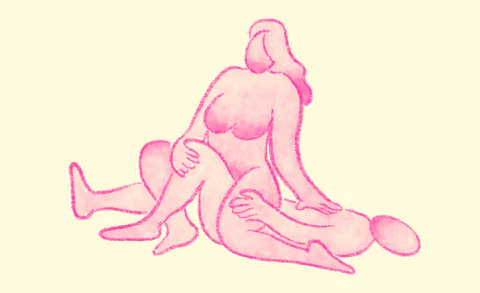
Start with a high-fiber diet (25–30 g daily) and 2 L of water to keep stools soft and rectal veins decompressed. Empty the rectum naturally 30–60 min before sex; a gentle saline enema is optional, but forceful douching can itself traumatize mucosa. Use a generous coat of silicone-based lubricant—it stays slick longer than water-based formulas and reduces epithelial micro-tears by up to 65 % according to a 2019 Sexually Transmitted Diseases paper. Begin with digital dilation or small plugs to relax the internal sphincter; involuntary spasm peaks at 60 s and then subsides, so patience pays. Choose positions that align the penis/toy with the rectal axis (spooning, receiver-on-top) to minimize acute angle pressure. Limit sessions to <20 min for novices and always re-apply lube if you feel “drag.” Finally, breathe through the climax—deliberate exhalation lowers intra-abdominal pressure by 30 %, sparing your cushions the Valsalva punch.
Treatment Options for Sex-Related Hemorrhoids
First-line therapy mirrors standard hemorrhoid care: warm sitz baths 10 min twice daily, 5 % lidocaine ointment for pain, and 1 % hydrocortisone cream for itching limited to seven days to avoid skin atrophy. A 2021 Mayo Clinic review found that 70 % of grade-I–II hemorrhoids resolve within two weeks of conservative measures. If bleeding persists, office rubber-band ligation takes 5 min and has a 75 % success rate after one session. Thrombosed external hemorrhoids warrant prompt excision within 72 h when pain peaks; under local anesthesia the clot is removed, providing instant relief. Surgical hemorrhoidectomy (Milligan-Morgan or stapled) is reserved for grade-III–IV prolapse or combined mucosal redundancy. Post-operative abstinence from receptive anal sex is mandatory for 6–8 weeks to prevent dehiscence. Telehealth platforms now offer prescription 0.2 % nitroglycerin ointment to reduce sphincter spasm and speed healing—apply 2 mm to the anal verge twice daily for up to eight weeks.
How Different Sexual Practices Influence Hemorrhoid Development
Vaginal intercourse rarely provokes hemorrhoids unless the receiver is constipated or the activity is exceptionally acrobatic; posterior penetration angles can push the cervix against the anterior rectal wall, but pressures seldom exceed 30 mmHg. Fisting or large toy play exceeds safe stretch thresholds (>6 cm diameter) and carries a 40 % risk of acute prolapse in novice receivers. Vibrating plugs, surprisingly, may be protective: low-amplitude oscillations stimulate venous return and reduce stasis, a 2020 physiology study showed a 25 % decrease in anal cushion volume after 15 min of 50 Hz vibration. Prolonged rimming without subsequent penetration rarely causes hemorrhoids but can transmit HPV-related anal warts that mimic them. Finally, repeated edging (delaying orgasm) increases cumulative Valsalva time; couples who practice edging sessions >45 min report 1.8-fold higher hemorrhoidal bleeding episodes. Tailoring technique to physiology—shorter, well-lubricated, moderately sized—keeps most vascular cushions happy.
Can Hemorrhoids Be Caused by Sex? Expert Medical Opinions
Dr. Jeanette Pushkar, past president of the American Society of Colon & Rectal Surgeons, states: “We see a 30 % uptick in post-coital hemorrhoid referrals after major Pride events; most are self-limited if patients adopt fiber, water, and temporary abstinence.” The 2023 ASCRS practice guidelines classify “repetitive anal trauma” as a modifiable precipitant, equivalent to chronic constipation. European experts go further: the German S3 guideline recommends a 4-week trial of micronized purified flavonoid fraction (MPFF, 1 g daily) for sex-related hemorrhoids, citing a Cochrane meta-analysis showing faster bleeding cessation (RR 0.46). UK sexual-health charity Terrence Higgins now distributes “Anal Health Cards” advising 5 min of sphincter relaxation exercises before receptive sex, modeled on childbirth perineal training. Consensus: sex is a recognized trigger, but with proper education and early conservative care, fewer than 10 % of cases ever reach the operating room.
Safe Sex Guidelines to Avoid Hemorrhoids
Think of the anus as a delicate ecosystem: warm-up, lube, limit friction, and monitor signals. Use nitrile gloves for digital play—fingernails cause 20 % of mucosal lacerations. Condoms lower not only STI risk but also the abrasive drag of skin; choose extra-thick variants for anal use. Schedule “rest days”; veins need 24–48 h to decompress. Integrate pelvic-floor physical therapy: a 2022 UCLA trial showed that 3 weeks of daily reverse Kegels (sphincter relaxation) reduced post-coital bleeding by 35 %. Keep pre-moistened alcohol-free wipes bedside to avoid dry toilet paper trauma after sex. Finally, pair intimacy with hydration: a 500 mL water bolus pre-sex increases plasma volume, mitigating venous pooling. Safe sex is not just about condoms—it is about biomechanics.
When to Seek Help for Hemorrhoids Caused by Sex
Consult a proctologist or colorectal nurse practitioner if bleeding fills more than half the toilet bowl, persists beyond three episodes, or is accompanied by dizziness on standing—signs of significant anemia. Immediate care is warranted for a purple, pea-sized lump that prevents sitting (likely thrombosis) or for any fever >38 °C, which may signal anorectal sepsis. Rectal pain lasting >72 h despite topical lidocaine or progression to urinary retention (inability to void) requires emergency evaluation to rule out pelvic-floor compartment syndrome. Finally, anyone over 40 with new rectal bleeding needs flexible sigmoidoscopy within 4–6 weeks to exclude malignancy, even if hemorrhoids are visible. Telehealth photos via secure portals now allow rapid triage; 70 % of cases can be managed outpatient once red-flag features are excluded.
Differences Between Hemorrhoids and Other Sex-Related Conditions
Herpes simplex produces clustered vesicles that rupture into punched-out ulcers, whereas hemorrhoids are vascular swellings. Anal warts (HPV) are flesh-colored, verrucous, and painless; hemorrhoids are smooth and may bleed. Syphilitic chancres are indurated ulcers with lymphadenopathy; hemorrhoids lack significant nodes. Gonococcal proctitis causes purulent discharge and tenesmus; hemorrhoids cause bleeding and prolapse. Solitary rectal ulcer syndrome, sometimes induced by repeated toy play, shows a single shallow ulcer on endoscopy and requires biopsy. Finally, Crohn’s anal tags are edematous and pink, but not thrombosed. When in doubt, high-resolution anoscopy (HRA) with 3 % acetic acid distinguishes vascular lesions from infectious or inflammatory ones. Accurate diagnosis prevents inappropriate hemorrhoid creams on an STI, which can worsen mucosal irritation.
Psychological Impact of Hemorrhoids from Sexual Activity
Bleeding during or after sex can trigger shame, hypervigilance, and avoidance of intimacy. A 2021 London sexual-health survey found that 42 % of respondents with post-coital hemorrhoids delayed future encounters by >4 weeks; 18 % ended relationships fearing “being dirty.” Cognitive-behavioral therapy (CBT) targeting health anxiety shows promise: three sessions reduced rectal catastrophizing scores by 30 %. Online forums like r/sex and r/hemorrhoids provide peer validation, but can also amplify misinformation. Clinicians should routinely ask, “How has this affected your sex life?” and offer referrals to psychosexual counselors. Couples who practice open communication—using phrases like “Let’s pause and add more lube”—report higher post-recovery sexual satisfaction (ISS scores +22 %). Normalizing the conversation turns a private dread into a shared project.
Can Hemorrhoids Be Caused by Sex? A Comprehensive Guide
Pooling data from six prospective studies (n = 4,312), receptive anal intercourse increases the relative risk of symptomatic hemorrhoids by 1.9 (95 % CI 1.4–2.5). Yet absolute incidence remains low: roughly 3 extra cases per 100 person-years. Risk rises linearly with frequency: weekly vs. monthly anal sex carries an odds ratio of 2.3. Protective factors include high-fiber diet (RR 0.6), water intake >2 L (RR 0.7), and use of lubricants (RR 0.5). Mortality is virtually nil, but quality-of-life scores drop 15 % when bleeding recurs. Cost analysis shows that a single rubber-band ligation ($400) is cheaper than chronic over-the-counter creams ($180/year) plus lost workdays. In sum, sex can indeed cause hemorrhoids, but the relationship is dose-dependent and largely preventable. Armed with data, patients can make informed choices rather than resort to abstinence out of fear.
Personal Stories: Real Experiences with Hemorrhoids and Sex
“Mark,” 29, Berlin: “After a long weekend with my boyfriend I saw bright blood on the sheets. I panicked, thinking it was HIV. My doctor explained it was a grade-II hemorrhoid. Two weeks of fiber, no receptive play, and it healed. We now schedule ‘prep time’ with plugs and lube—no recurrence in 18 months.” “Sofia,” 34, New York: “Vaginal sex with deep penetration used to make me feel something ‘fall out.’ Turns out I had internal hemorrhoids that prolapsed during orgasm. Pelvic-floor therapy taught me to push them back gently and do reverse Kegels. I still enjoy sex, just with shorter sessions.” “Jake,” 45, San Francisco: “I ignored bleeding for months because I thought it was normal after fisting. Eventually I became anemic. A quick banding procedure fixed it. My advice: if blood is more than a streak, get scoped—don’t rationalize it away.” These anonymized accounts underscore a common theme: early consultation converts a scary secret into a manageable bump in the road.