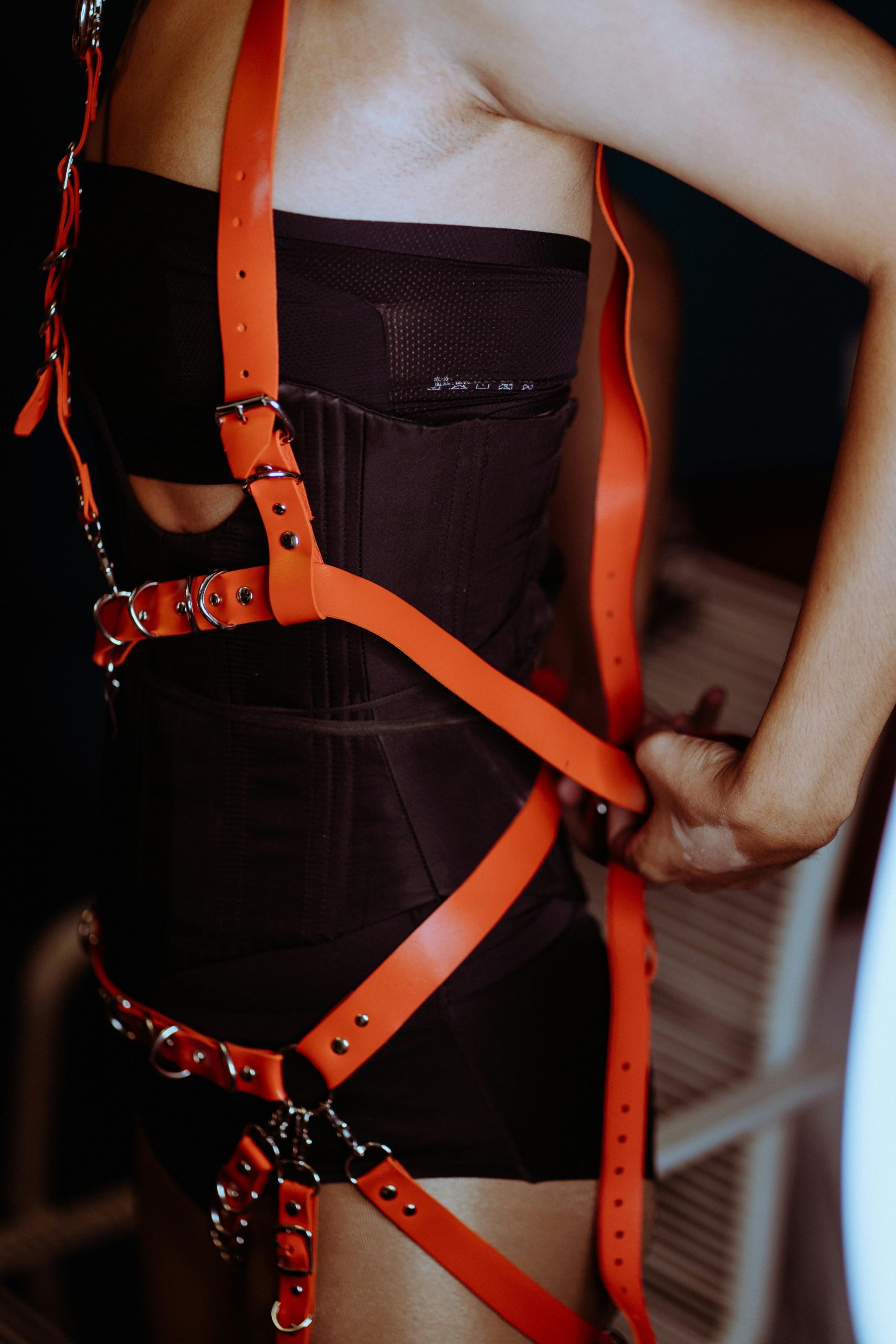
What Is a Rigger in BDSM? Defining the Role and Core Responsibilities
A “rigger” is the person who designs, applies, and maintains rope bondage on a consenting partner (often called the “bottom” or “rope-bunny”). Far from being a casual hobbyist with a hank of clothesline, the rigger is legally and ethically accountable for every wrap, knot, and suspension point. Core responsibilities include pre-scene negotiation (limits, health conditions, safe-words), real-time monitoring of circulation and nerve function, and structured after-care that can last hours or days. The title is borrowed from sailing and theatre riggers—professionals who lift or secure heavy loads overhead—because the same principles of mechanical advantage, load distribution, and redundancy apply when a human body is hanging six feet off the ground. In most Western dungeons, the rigger is also the scene’s “DM” (decision-maker); even if a club’s staff Dungeon Monitor wanders by, the rigger’s word is final on whether the scene continues, pauses, or stops.
What Is a Rigger in BDSM? Understanding the Skillset and Mindset
Skill-wise, a competent rigger is equal parts engineer, athletic coach, and somatic psychologist. You need to know how to tie a single-column tie that will not collapse under load, how to read capillary refill time in under three seconds, and how to spot the difference between endorphin tears and genuine distress. Mindset is even more critical: riggers cultivate “dominant empathy,” the ability to stay calm, horny, and creative while simultaneously running a mental checklist of nerve paths, rope tension, and bottom head-space. Many experienced riggers keep a written log—some use Google Sheets—of every scene: rope diameter, suspension height, duration, bottom feedback, and any pink-numb fingers. Over time this becomes a data set that informs future risk decisions. According to a 2022 survey by the National Coalition for Sexual Freedom (NCSF), 71 % of rope-related injury reports cited “rigger over-confidence” rather than equipment failure, underscoring that mindset is the ultimate safety tool.
What Is a Rigger in BDSM? Exploring the Artistry and Technique
Once basic safety is hard-wired, riggers often pursue two aesthetic lineages: Japanese Shibari (emphasizing asymmetry, suffering poses, and visual poetry) and Western rope bondage (prioritizing immobilization, sexual access, and clean straight lines). Both camps demand obsessive attention to frictions—where rope crosses rope—and to “flow states” that let the bottom drop into sub-space while the top stays hyper-aware. Advanced practitioners study cinematography, lighting, and even color theory; Instagram accounts like @shibari.study highlight how a simple switch from natural jute to black hemp can shift the emotional register from pastoral to gothic. Technique drills include tying a suspension-worthy chest harness in under 90 seconds blindfolded, or transitioning from a face-up horizontal to an inverted vertical without ever letting the bottom’s weight rest on a single nerve bundle. These drills are filmed, reviewed, and critiqued in the same way a gymnastics coach reviews a floor routine.
What Is a Rigger in Bigger Picture of BDSM? Context and Community
Inside the broader leather, kink, and swinger ecosystems, riggers occupy a niche that intersects with educators, fetish photographers, and performance artists. Major U.S. cities host “Rope Bite” peer-rope gatherings where riggers self-segregate by experience level: green bracelets for “watch only,” yellow for “floor work only,” red for “suspension capable.” These events are often the first place a newcomer sees a $300 seven-meter hemp rope treated with camellia oil and hung to dry like artisanal pasta. The community also polices itself: if a rigger repeatedly ignores safe-word calls or leaves rope marks that evolve into scar tissue, their name circulates on private Discord servers long before any public call-out. In this sense, the rigger role is both elite and fragile—one bad scene can exile you from play spaces that took years to access. Conversely, skilled riggers are hired to perform at goth clubs, teach at sexuality conferences, and even consult for Hollywood productions needing “safe looking” rope work on camera.
The Essential Skills Every Rigger Needs to Master
Before you ever suspend, master the “big five”: single-column tie, double-column tie, inline cuff, ladder harness, and quick-release knot. Each must be executable with both hands, under low red light, on a sweaty panicking bottom. Add CPR certification and a basic anatomy refresher focused on the brachial plexus and peroneal nerve. Finally, learn emotional triage: how to talk a bottom down from a sudden crying jag without untying so fast that you drop them on their head. Many riggers take the two-day “Stop the Bleed” course offered free by U.S. hospitals; tourniquet skills transfer directly to rope scenes if a suspension ring fails. Practice on yourself first—tie your own thigh until it goes numb, then time how long sensation takes to return. That data becomes your personal “nerve return baseline” and helps you calibrate future scenes.
Shibari vs. Western Rope Bondage: A Rigger’s Perspective
Shibari purists will tell you that kinbaku (“tight binding”) is about energy exchange, not restraint; Western riggers counter that if the bottom can wiggle out, you failed. In practice, the divide is less ideological than ergonomic. Shibari uses 7-8 m ropes, encouraging frequent re-threading that massages the skin; Western scenes favor 15 m ropes for fewer knots and faster sexual access. Suspension points differ too: Shibari favors the “takate-kote” chest harness that can leave glorious bruises, whereas Western rigs distribute weight across hips and thighs to keep the bottom functional for intercourse. Experienced riggers cherry-pick: they might open with a Shibari-inspired hip harness for aesthetics, then transition to a Western spreader bar for genital access. The hybrid style is now so common that rope vendors sell “fusion kits” containing both short jute lengths and single long synthetic ropes dyed to match.
Safety First: Critical Risk Awareness and Mitigation for Riggers
The cardinal rule: “If you can’t put a finger under the rope, it’s too tight.” Beyond that, riggers follow the “15-minute rule” for any position where hands are above the heart—check radial pulse every quarter-hour. Nerve injuries can appear 48 hours post-scene, so send a next-day check-in message and document any lingering numbness. Build two points of failure into every suspension: primary ring plus backup carabiner, or two separate hard points on opposite beams. Keep EMT shears in three places—your pocket, the rope bag, and the nightstand—and test them monthly on 6 mm hemp to ensure they still slice in one motion. Finally, negotiate emergency services: if the bottom faints, do they want 911 called immediately or do they prefer private paramedic friends? Write the agreed plan on a whiteboard visible to dungeon staff.
Rope, Gear, and Tools: A Rigger’s Essential Kit Guide
Start with six 8 m lengths of 6 mm untreated hemp ($18 each) and two 15 m synthetic ropes for water scenes—synthetic won’t shrink and tighten when wet. Add a $35 suspension ring rated to 5,000 lbs, four locking carabiners, and a $12 pair of safety shears. Advanced kits include a pulse oximeter ($25) that clips onto a bottom’s finger mid-air, giving real-time oxygen saturation readouts. For photography, riggers often pack a small LED puck light with red filter; red hides rope burn and keeps pupils dilated for that “dark dungeon” aesthetic. Finally, invest in a $40 yoga mat cut into 2-foot squares—place under knees or hips during partial suspensions to prevent pressure sores. Store everything in a rigid toolbox labeled “rope first-aid” so dungeon staff can locate it instantly if you step away.
The Rigger/Bottom Dynamic: Communication, Trust, and Partnership
Great rope scenes start days earlier with a shared Google Doc: list medications, past injuries, and a 1-10 pain scale definition (“my 7 is your 4”). During the scene, the rigger gives continuous narration—“I’m moving to your left wrist now”—which keeps the bottom oriented and provides early warning. Post-scene, the rigger offers “rope burritos,” wrapping the bottom in blankets and feeding them chocolate to counter endorphin crash. Many couples adopt a “24-hour veto”: either partner can cancel an upcoming rope date without explanation, no questions asked. Over months, this builds a trust bank that lets the rigger push further—perhaps a first inversion—because the bottom knows the veto still exists. Ironically, the strongest partnerships often look almost platonic in public: the rigger checks rope marks like a coach inspecting calluses, while the bottom critiques knot placement like an art director.
Beyond the Knots: The Psychology and Connection of Rope Bondage
Neuroscientist Dr. Nan Wise’s fMRI studies show that consensual restraint activates the anterior cingulate cortex—the same region that lights up during deep meditation. For many riggers, the turn-on is less sexual than existential: they become the architect of another human’s sensory world. The rope becomes an extension of proprioception; experienced bottoms report “feeling” the rigger’s heartbeat through the lines. This fusion can trigger “rope drop,” a sub-space hangover characterized by trembling and emotional lability. Smart riggers schedule buffer time: no dinner parties immediately after a heavy suspension. Some keep a “scene journal” together, pasting Polaroids and jotting adjectives—“floaty,” “terrified,” “cathedral quiet”—which becomes a shared emotional map for future ties.
Common Mistakes New Riggers Make (And How to Avoid Them)
Number one error: copying YouTube tutorials shot on flexible Japanese models and assuming the tie transfers to a 250-lb rugby player. Always adapt harnesses for body mass and shoulder width. Second mistake: “rope dumping,” i.e., tying too fast without checking in; set a phone timer to force a 30-second pause every five minutes. Third: neglecting after-care because you’re hard and eager to fuck—postponing after-care triples the likelihood of next-day sub-drop emails that spiral into relationship drama. Fourth: buying cheap dyed rope from hardware stores; the dye can leach into mucous membranes and cause chemical burns. Finally, never suspend on a door-frame pull-up bar; they’re rated for dynamic, not static load, and will rip out of drywall under a 120-lb bottom.
Finding Your Path: Resources and Communities for Aspiring Riggers
Start with TheDuchy.com, a free, ad-free library of step-by-step rope tutorials vetted by certified sex educators. Move on to “Two Knotty Boys” YouTube playlists for Western basics, then progress to ShibariStudy.com for pay-what-you-want Japanese tutorials filmed in 4K. Offline, search FetLife for “TNG” (The Next Generation) rope events—geared to 18-35-year-olds and less intimidating than old-guard leather bars. If you’re in the U.S., attend a “Bound in Boston” or “Ropecraft” weekend intensive; Europe offers “EURIX” in Berlin and “Shibari Festival” in Rome. Budget tip: volunteer as a dungeon monitor; most events waive the $150 ticket fee in exchange for four hours of crowd control, giving you free access to world-class riggers the rest of the weekend.
Ethical Considerations and Best Practices for Riggers
Consent must be informed and enthusiastic; a drunk “sure, tie me up” is a hard no. Record verbal consent on your phone if local law allows one-party recording—protects you legally and keeps standards high. Avoid racialized or gendered language (“exotic little geisha”) that appropriates trauma; ask bottoms how they wish to be described. If you teach, pay forward your knowledge: offer at least one free monthly class for every paid workshop. Finally, disclose romantic entanglements: if you’re about to tie your ex’s new partner, transparency prevents dungeon drama. The kink community is tiny; reputation is currency, and ethical riggers last decades.
The Aesthetics of Rope: Creating Beautiful and Functional Bondage
Think like a cinematographer: place your hard point slightly off-center to create diagonal lines that elongate the body. Use natural jute for warm skin tones, black hemp for high-contrast noir shots. Incorporate negative space—gaps between wraps—so the eye travels through the image. Functional beauty matters too: a hip harness can look gorgeous but fail if the suspension ring sits too low and tilts the pelvis. Test aesthetics under play-party lighting (usually 2700 K amber) before assuming it will pop on camera. Many rigters carry a small color-correction card to white-balance phone cameras mid-scene, ensuring the rope’s true hue is captured for later Instagram posts that double as portfolios for teaching gigs.
Consent, Negotiation, and Aftercare: The Rigger’s Crucial Role
Negotiation starts with a yes/no/maybe list covering body parts, sexual contact, and photography. Write the safe-word on blue painter’s tape stuck to the suspension ring—visible to both parties even when voices fail. During the scene, the rigger initiates “traffic-light checks” every ten minutes: “Color?” Green means go, yellow means adjust, red means stop and release. After untying, offer a “rope cocoon,” wrapping the bottom in all your used ropes while they sit on your lap; the lingering smell of jute acts as olfactory after-care. Schedule a 48-hour follow-up to ask about bruise evolution or unexpected triggers; document any new numbness and refer to a kink-aware physician if needed. Remember, consent is an ongoing conversation, not a one-time checkbox.
Advanced Techniques: Taking Your Rigger Skills to the Next Level
Once floor work is flawless, learn load-line math: calculate vector forces so a 120-lb bottom in an inverted strappado doesn’t exceed 800 lbs of pull on your hard point. Practice “face-up hip key” transitions that rotate the bottom 180 degrees without touching the ground—requires perfect timing and two uplines moving in opposition. Attend a suspension-worthy CPR course that covers positional asphyxia, a rare but fatal complication where the diaphragm can’t expand against tight chest ropes. Finally, apprentice under a recognized master: most Japanese senseis require 100 documented hours of observation before you can tie their model. Film every advanced scene from two angles, then review frame-by-frame to spot micro-movements that precede nerve impingement. Mastery is measured not by how extreme the tie, but by how invisible your safety protocols appear to the mesmerized audience.