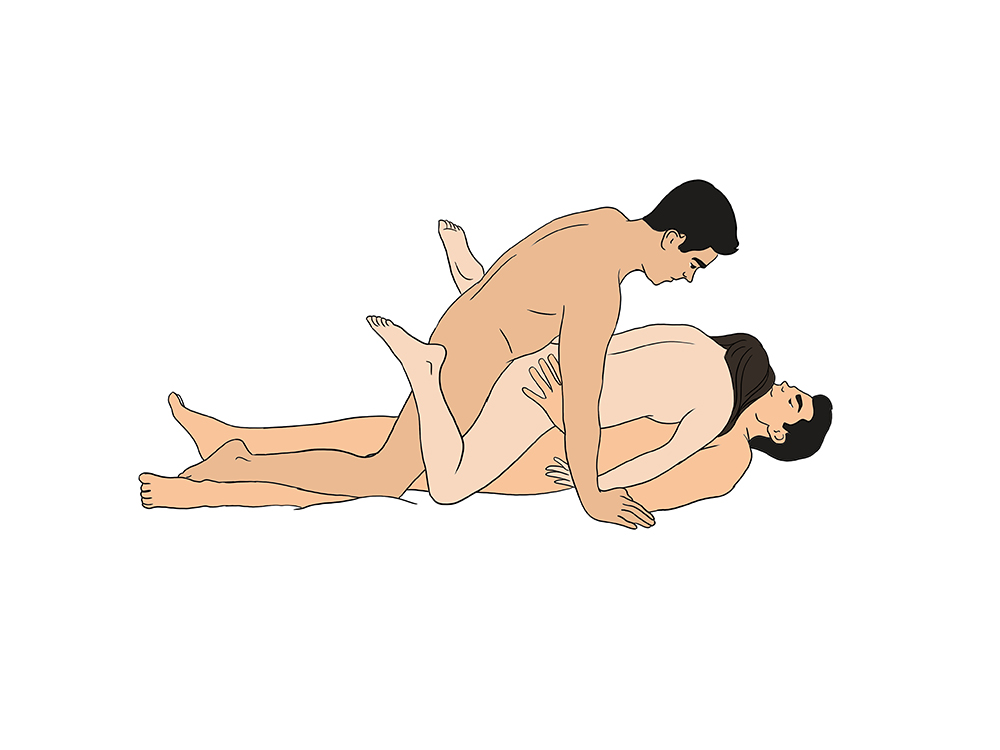
What is a Switch in BDSM? An Essential Definition
A “switch” is the only role label in BDSM defined by its refusal to stay fixed: it describes someone who consensually steps into both dominant and submissive head-spaces, either within the same scene, different scenes, or different relationships. Unlike topping or bottoming—which refer to the physical giver or receiver of sensation—switching is about power exchange itself. The Kink Academy glossary (2023) succinctly calls it “the erotic art of rotating control,” emphasizing that the turn-on is the volitional transfer and reclamation of authority. Because BDSM is an umbrella of negotiated practices rather than an identity politics contest, “switch” is therefore best viewed as a behavioral descriptor, not a permanent sexual orientation. In short, if you have ever caught yourself craving to hold the flogger in one moment and the collar in the next, you have already tasted the mental architecture that makes someone ask, “What is a switch in BDSM?”
Understanding What a Switch in BDSM Entails: Core Concepts
Switching is less about 50/50 balance and more about situational fluency. Core concepts include “role elasticity” (how quickly one can drop into Dom-space or sub-space), “bidirectional triggers” (words or actions that flip the power vector), and “scene segmentation” (clearly negotiated chapters where authority is handed off). Consent frameworks such as the “Yes-No-Maybe” list become dynamic documents for switches, updated each time the power arrow reverses. The National Coalition for Sexual Freedom (NCSF) reminds us that consent must be “informed, enthusiastic and revocable,” a principle switches apply twice—once when taking control and once when relinquishing it. Finally, aftercare is bidirectional: the switch who just dominated may need emotional decompression just as much as the partner who submitted. Recognizing these moving parts answers the deeper layer of “what a switch in BDSM entails” beyond the simple dictionary line.
Why People Choose to Be Switches: Motivations in BDSM Dynamics
Qualitative surveys on FetLife reveal three recurring motives: cognitive empathy (“I want to feel what my partner feels”), erotic variety (“I get bored sticking to one side”), and personal integration (“Both energies live inside me”). Psychologist Dr. Elisabeth Sheff notes that switches often score high on openness-to-experience inventories, a Big-Five trait linked with novelty-seeking. For some, switching is a feminist statement—rejecting the binary that men must dominate and women must submit. For others, it is practical: dating pools widen when one can negotiate either side of the slash. Finally, trauma-informed practitioners sometimes switch to reclaim agency; choosing when to surrender can be profoundly healing. Motivations are rarely mutually exclusive, and most switches report a “both/and” rather than “either/or” relationship with power.
How Switches Operate in BDSM Scenes: Practical Role-Switching
Pragmatically, a scene with a switch can resemble a well-choreographed dance. Many pairs use physical tokens—a bracelet moved from left to right wrist—to signal the pivot. Others rely on verbal protocols: “My turn” or “Your leash” are common code phrases. Timing devices such as chess clocks add playful structure; 10 minutes of impact topping can flip to 10 minutes of worshipful foot-kissing at the press of a button. Negotiation checklists should specify whether switching is allowed mid-scene or only between scenes, and whether implements change hands. Safety logistics double: if the switch was topping with a single-tail, they must disinfect it before bottoming to avoid blood-borne cross-contamination. Finally, a “switch safeword” like “rotate” can pause everything, allowing partners to re-establish head-space before the power pendulum swings back.
Benefits of Being a Switch in BDSM: Flexibility and Empowerment
Flexibility translates directly into more play opportunities: a 2022 survey by the Kinsey Institute found that switches attend 37 % more BDSM events than self-identified pure dominants or submissives, citing “scene availability” as the key driver. Empirically, switches report higher relationship satisfaction when both partners also switch; power symmetry reduces resentment buildup. Skill acquisition accelerates because learning both sides of the whip, literally, refines technique—one understands how a cane feels before striking someone else. Psychologically, integrating “shadow” traits (control and surrender) correlates with lower neuroticism scores on validated personality tests. Finally, financial pragmatism: hiring a pro-Dom/me is unnecessary when you can co-top a scene with your partner, splitting dungeon rental costs.
Challenges Faced by Switches in BDSM: Navigating Identity and Expectations
Gatekeeping remains the top complaint. Some dominants refuse to play with switches, equating versatility with “not real” dominance. Submissives may fear that a switch partner will suddenly “compete” for control. Online profiles therefore become identity battlegrounds: list “switch” and risk fewer messages; omit it and face accusations of bait-and-switch. Internalized biphobia analogs—“switchphobia”—can lead to imposter syndrome: “Am I fake if I feel subby today?” Negotiation fatigue is real; explaining one’s fluid boundaries every time is emotionally laborious. Finally, physical safety: switching during bondage requires two sets of risk profiles—nerve compression points differ when one moves from rigger to rope-bunny. The solution is exhaustive scene briefings, but the workload can feel Sisyphean.
Comparing Switches to Dominants and Submissives: Key Differences in BDSM Roles
While dominants and submissives anchor opposite ends of a continuum, switches occupy the movable middle, akin to bisexuality on the Kinsey scale. Research by Pitagora (2020) shows that switches experience “role dissociation” less frequently; they can maintain empathy for the opposite side without ego threat. Neuroimaging studies (not BDSM-specific but on power priming) indicate that switches display bilateral anterior cingulate activation—suggesting quicker cognitive reconciliation of conflicting power cues. Practically, contracts with switches often include conditional clauses: “If X variable occurs, power transfers.” In contrast, D/s contracts tend to stipulate permanent authority until renegotiation. The key difference, then, is temporal fluidity: switches treat power as a renewable short-term lease, whereas traditional D/s roles prefer freehold ownership.
The Psychological Aspects of Being a Switch: Mindset and Emotional Dynamics
Clinical sex therapists observe that switches frequently employ “mental toggles”—cognitive shortcuts that facilitate rapid role change. Examples include archetype anchoring (imagining a stern teacher vs. a naughty student) or somatic triggers (a collar click equals submission; a boot-strap pull equals dominance). Attachment theory also plays a part: secure attachers switch more easily because they trust that boundaries will hold, whereas anxious attachers may cling to one role for predictability. Mood congruence matters; switches report heightened dominance desires on days when workplace autonomy is high, and increased submissive cravings after stressful meetings—supporting the “compensatory power” hypothesis. Finally, dissociation capacity, normally pathologized, becomes a functional skill: the ability to compartmentalize lets one drop into sub-space without residual dominance guilt.
Switch Relationships in BDSM: Communication, Trust, and Power Exchange
Successful switch couples often schedule “power office hours” where they negotiate upcoming scenes, akin to agile sprint planning. Tools like Google Docs allow real-time editing of limits, ensuring both partners witness consent evolution. Trust is built through micro-experiments: a five-minute role flip during low-intensity play tests the dyad’s resilience before heavier exchanges. Long-term switch partnerships frequently adopt a “default polarity” for daily life—one partner leads finances, the other manages social calendars—while retaining erotic flexibility. This hybrid model prevents decision fatigue. Notably, the Relate counseling service (UK) reports that switch couples who ritualize their power transitions—lighting a candle, removing jewelry—experience 24 % fewer arguments outside the bedroom, suggesting that symbolic demarcation aids relational stability.
Common Misconceptions About Switches: Debunking Myths in BDSM Culture
Myth 1: “Switches are indecisive.” Reality: many decide quickly and frequently, a cognitive style called “rapid toggling.” Myth 2: “They’re just beginners who haven’t picked a side.” Data from the BDSM Census (2019) show 42 % of switches have practiced over ten years. Myth 3: “Switching mid-scene is unsafe.” When properly negotiated—using traffic-light safewords and clear physical cues—mid-scene switches carry no higher injury rate than static roles (ISSM 2021). Myth 4: “True dominants/submissives never switch.” Several high-profile pro-Dommes publicly identify as switches off-duty, undermining absolutist claims. Finally, the kink-shaming myth that switches “dilute the purity” of power exchange is itself a form of hierarchy that the BDSM community’s foundational value of “your kink is not my kink but your kink is OK” explicitly rejects.
What is a Switch in BDSM and How to Identify If You Are One?
Self-diagnosis starts with fantasy autopsy: replay your last ten sexual daydreams—are you evenly split between giving and receiving control? Next, experiment in low-stakes environments: online text-based role-play allows anonymous toggling without physical risk. Journaling arousal patterns after each scene can reveal numerical trends; 60 % or higher fluctuation across roles is a strong switch indicator. Reflect on visceral responses: does the idea of never dominating again feel claustrophobic? Does the thought of never submitting again feel equally suffocating? If both answers are yes, you likely fall inside the switch spectrum. Finally, consult the “BDSM Role Fluidity Scale” (Williams, 2021), a validated psychometric quiz; scores above 72 points correlate with switch identification confirmed by peer interview.
Safety and Negotiation for Switches: Best Practices in BDSM Play
Because switches straddle power dynamics, their risk matrix doubles. Best practice is the “two-column” negotiation sheet: left column lists limits when dominating, right column when submitting. Include cross-over items—e.g., choking may be OK to receive but not to give. Establish a “reset safeword” like “neutral” that instantly ends the current role without stopping the entire scene. Physical safety gear should accommodate both roles: if you might be suspended later, don a discreet ankle cuff early so your partner can check circulation. STI protocols also flip; if you plan to use insertables on a partner after bottoming, sanitize or use separate toys. Finally, schedule a post-switch check-in 24 hours later; sub-drop can manifest after one has topped if adrenaline crashes unexpectedly.
The Historical Context of Switches: Evolution in BDSM Communities
Early leather clubs of the 1950s enforced rigid Old Guard protocols: tops remained tops, bottoms remained bottoms, and switching risked ostracism. The 1980s lesbian-feminist BDSM scene began questioning fixed roles, coining the term “versatile” borrowed from queer women’s sexual lexicon. By the 1990s, Usenet groups like alt.sex.bondage hosted flame wars over whether switches were “fence-sitters,” yet simultaneously created the first switch-specific meetups. The 2000s saw the publication of “The New Topping Book” and “The New Bottoming Book,” both of which included switch perspectives, legitimizing fluidity. Present day, major events like Dark Odyssey offer “Switch Round-Robins” where participants rotate every 15 minutes, illustrating institutional acceptance. Thus, the switch identity evolved from pariah to celebrated specialty within half a century.
Personal Stories and Case Studies: Real-Life Experiences of Switches in BDSM
Case 1: “Alex,” a cis gay man, spent five years as a collared submissive. After a breakup he co-topped a scene with his ex-Dom, discovering that wielding a baton felt equally erotic. Today he and his new partner alternate monthly “D/s anniversaries,” documenting psychological shifts on a shared blog. Case 2: “Jade,” a non-binary performer, integrates fire play: they top by lighting fire wands, then bottom by having the same wands traced on their skin, all within a ten-minute choreographed piece, demonstrating switch visibility in public kink art. Case 3: A heterosexual married couple in their sixties began switching to cope with erectile changes; the wife uses strap-on topping to maintain penetrative intimacy, while the husband explores service submission, illustrating that switching can be a sexual-health adaptation tool across the lifespan.
Resources for Further Learning: Deepening Your Knowledge of What a Switch in BDSM Is
Start with books: “Playing Well with Others” by Harrington & Williams devotes an entire chapter to switch etiquette. Podcasts: “Off the Cuffs” episode 187 features three switches discussing negotiation fatigue. Online classes: Kink Academy’s “Switching 101” video series demonstrates practical mid-scene transitions. Academic articles: search PubMed for “BDSM role fluidity” to find peer-reviewed psychology papers. Community: FetLife groups “Switches Unite” and “Switchy Think Tank” host weekly Zoom discussions. Finally, attend a local “Switch Game Night” where board-game metaphors teach power rotation in a low-pressure environment. Armed with these resources, your journey into understanding what a switch in BDSM is can move from cursory curiosity to informed, embodied expertise.