Let’s be honest—if you’ve spent more than five minutes on the internet, you’ve probably bumped into some tentacles that were definitely not on a squid. Tentacle erotica, once a whispered-about corner of Japanese manga, has wriggled its way into global pop culture, cosplay memes, and even high-fashion runways. But how did we get from 19th-century woodblock prints to Netflix anime thumbnails sporting suspiciously flexible appendages? Grab your metaphorical snorkel; we’re diving deep—without getting ink on the carpet.
I. Introduction: Defining a Niche Phenomenon
Tentacle erotica is the subgenre that asks, “What if our monster had… extra hands?” Centered on sexual or sensual encounters between humans (or humanoids) and tentacled creatures, it lives mainly inside manga, anime, and fan art, but also pops up in video-game mods, Etsy jewelry, and HBO plotlines. The goal here isn’t to blush or condemn; it’s to unpack how legal loopholes, artistic rebellion, and good old-fashioned human curiosity fused into a cultural phenomenon that’s equal sides titillation, satire, and art-history lesson.
II. Historical Origins and Development
Early Depictions and Mythological Precursors
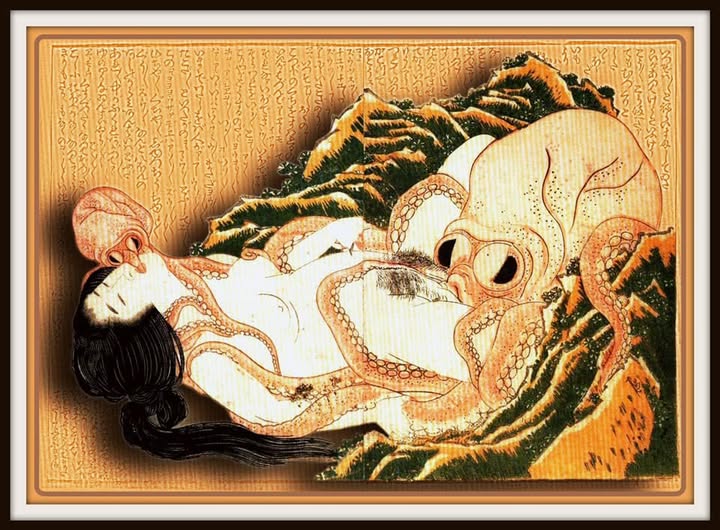
Long before pixelated streaming sites, sailors swapped tales of krakens dragging ships into the abyss—basically the OG tentacle fantasy, minus the heart-eye emojis. On land, Japanese artist Katsushika Hokusai etched The Dream of the Fisherman’s Wife around 1814, depicting a woman entwined with two octopi in what art historians politely call “an amorous encounter.” The print was never hidden in a shame-shrine; it circulated like a bestseller, proving that erotic cephalopods aren’t a modern kink but a recurring motif in humanity’s “things that might eat you but also—wow” file.
Emergence in Modern Media
Fast-forward to 1986: anime director Toshio Maeda is asked to create an “erotic horror” OVA but can’t show certain anatomy thanks to Japan’s Article 175. Solution? Replace the anatomy with tentacles—technically not genitalia, legally in the clear, and visually unforgettable. The resulting series, Urotsukidōji: Legend of the Overfiend, married cosmic battles with very flexible violations, cementing genre staples: supernatural backstory, innocent heroine, and appendages that violate the laws of physics—and modesty.
Evolution of the Genre
From VHS grain to 4K streaming, the 90s through 2020s saw tentacle plots morph from simple “monster meets girl” to elaborate multiverse sagas. Character archetypes diversified: you now get consenting monster-brides, tentacled boyfriends with tragic pasts, and even slice-of-life comedies where the tentacles mainly do household chores. Animation software like Clip Studio Paint and open-source Blender rigs let indie artists animate slime physics on a ramen budget, pushing the genre from niche OVAs to Patreon-funded web comics in mere weekends.
III. Cultural Context and Interpretations
The Catalyst of Censorship
Japan’s Article 175, a Meiji-era statute banning “indecent” genital imagery, is the helicopter parent that accidentally birthed a billion-dollar genre. By forbidding straightforward depiction of genital penetration, the law nudged artists toward symbolic substitutes—tentacles, vines, energy beams, you name it. Think of it as the legal equivalent of telling kids they can’t have soda, so they brew espresso: the workaround becomes its own cultural force.
Symbolism and Thematic Depth
Ask ten scholars what tentacles “mean” and you’ll get eleven answers. Psychoanalysts see fear of castration; gender-studies grads flag power imbalances; horror buffs label it body-terror; marine biologists just want to be left out of it. Common threads include:
- Loss of control: Tentacles immobilize, echoing anxieties about debt, deadlines, or your phone’s screen-time report.
- The Other: Slimy appendages personify the alien—whether that’s foreign cultures, invasive tech, or your roommate’s mysterious leftovers.
- Monstrous-feminine/masculine: Sometimes the creature is hyper-male (aggressive penetration); other times it’s a maternal void (devouring womb). Either way, gender binaries get as tangled as the limbs.
Reception and Controversy
In Japan, erotic manga is sold next to sports magazines; tentacle titles sit quietly in the adult section, about as scandalous as a spicy romance novel in an American grocery store. In the West, the same content can trigger moral panics, customs seizures, and awkward explanations at Comic-Con panels. Feminist critiques split: some argue the genre fetishizes non-consent; others claim it provides a safe, fictional sandbox to explore power fantasies without real-world harm. The truth? Both readings coexist, depending on the specific work and the consumer’s context.
Mainstream Diffusion
Once something hits SpongeBob memes, it’s mainstream. Tentacles now sell hoodies, silicone phone grips, and even energy drinks. Game studios drop tentacled bosses into family-friendly RPGs because “eldritch horror” signals high stakes without the rating board drama. Fashion house Alexander McQueen once sent models down the runway sporting octopus crowns—no penetration implied, just high-concept chic. The imagery has been de-sexed, re-sexed, and merchandised into a visual shorthand for “edgy but playful,” the goth cousin of the unicorn latte.
IV. Popularity and Contemporary Status
Measuring a Niche
Because major platforms (hi, Apple, Google) ban explicit adult apps, raw download stats are elusive. Still, we have proxies: the subreddit r/tentai has six-figure followers; sites like nhentai tag thousands of titles; Pixiv hosts millions of user illustrations under “触手” (tentacle). Academic citations spiked after 2010, with journals like Porn Studies devoting entire issues to “monster erotica.” And if you’ve walked the artist alley of Anime Expo lately, you’ve seen more tentacle keychains than Starbucks cups.
Key Drivers of Niche Appeal
- Taboo & Exotic: Humans are wired to investigate the forbidden; tentacles check “exotic anatomy” without technically breaking bestiality laws (because, fictional creature).
- Fantasy Fulfillment: You can’t book a “consensual kraken” on Tinder, but you can read 200 pages of precisely that at 2 a.m. and still make your morning Zoom call.
- Artistic Freedom: Want to explore themes of bondage without real-world ropes? Tentacles auto-retract, glow, and apologize in the next panel. It’s BDSM with a built-in safeword.
- Subculture Cross-Pollination: Hentai fans, monster-romance readers, and queer illustrators swap tropes on Discord servers, birthing hybrid genres like “soft tentacle slice-of-life” or “non-binary alien courtship.”
Technological Impact
High-speed internet turned a Japanese VHS oddity into a global midnight snack. Digital art tablets lowered the entry barrier: you no longer need a studio; you need a $40 stylus and a dream. Crowdfunding platforms allow artists to draw niche commissions full-time, while blockchain NFT markets (for better or worse) let them auction animated tentacle loops for rent money. Meanwhile, AI image generators trained on… well, everything… can now produce bespoke tentacle scenarios faster than you can clear your browser history.
Current Trends and Future Trajectory
With OnlyFans-style paywalls and Patreon tiers, creators experiment beyond hetero-male gaze: LGBTQ+ storylines, asexual tentacle companions, and body-positive protagonists. Others hybridize with cyberpunk (tentacle drones) or cottagecore (tentacle gardener—don’t ask how the tomatoes get pollinated). Censorship, however, is tightening: new U.S. legislation like FOSTA-SESTA and evolving credit-card rules pressure platforms to purge adult content. The genre may retreat to decentralized servers, encrypted Discords, or Web3 galleries—tentacles finding the cracks, as always.
V. Frequently Asked Questions (FAQ)
Q1: Is tentacle erotica exclusively a Japanese creation?
Nope. While Japan industrialized the trope, Western art from Pompeii frescoes to 18th-century European engravings shows creatures getting cozy with humans. Japan just marketed it better.
Q2: What is the primary reason for its association with Japan?
A combo of strict genital-censorship laws and a robust domestic manga industry meant Japanese artists innovated tentacle workarounds at exactly the moment global VHS distribution took off. Right place, right (slimy) tentacle.
Q3: Is the genre solely about sexual content?
Hardly. Many modern titles foreground romance, horror satire, or existential philosophy. Think Shape of Water with more appendages and fewer subtitles.
Q4: How is this genre viewed within Japan compared to the West?
In Japan, it’s one flavor in a vast erotic buffet—consume or ignore. In the West, reactions swing from academic fascination to moral outrage, often depending on whether Fox News needs a headline that week.
Q5: Where can someone find academic or serious critical analysis?
Search JSTOR for “tentacle erotica” or pick up Robot Ghosts and Wired Dreams (University of Minnesota Press). For lighter takes, The Conversation and The Atlantic have both tackled the topic without clutching pearls.
VI. Further Reading and Authoritative Resources
- Academic gateway: “The Erotic Animated Film in Japan” – a deep dive into censorship and creativity.
- Cultural lens: JSTOR Daily’s short explainer balances scholarship with readability.
- Art history fix: The British Museum’s Hokusai page lets you zoom into the infamous octopus print without museum security breathing down your neck.
Disclaimer: Primary source material is 18+; engage critically and respect platform guidelines. Support living artists—don’t pirate their tentacle labor of love.
VII. Conclusion: Beyond the Surface
Tentacle erotica began as a legal loophole, grew into a transgressive art form, and now hovers somewhere between meme, merchandise, and scholarly goldmine. It’s a reminder that censorship breeds creativity, that fantasy thrives in the fuzzy space between desire and dread, and that culture—like tentacles—refuses to stay in its lane. So next time you spot a swirling appendage on a hoodie or in a game cutscene, you’ll know: you’re looking at centuries of myth, decades of legal pushback, and a global fandom that turned “forbidden” into “fandom.” Just maybe don’t open those links at work—unless your HR department is really into marine biology.