Ever feel like your bedroom routine is stuck on repeat—same song, same dance, same predictable finale? You’re not alone. Even the most electric couples hit the “we’ve tried everything” wall. The good news: you haven’t. Enter the Jockey position, an under-the-radar shape that blends the raw depth of doggy with the full-body melt of spooning, plus a front-row seat for eye contact. Below, we’ll unpack exactly what it is, how to slide into it without pulling a hamstring, and why it might become the new MVP of your repertoire.
I. Understanding the Jockey Position: Definition & Basics
A. What Exactly Is the Jockey Position?
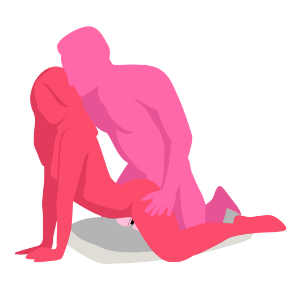
Think of it as “low-rider doggy.” The receiving partner lies flat on their stomach, legs together or slightly parted. The penetrating partner settles on top—chest to back, hips tucked low—like a jockey straddling a racehorse. The angle keeps penetration shallow-to-medium, but the stacked bodies create crazy-good friction and full-body skin contact.
B. Jockey vs. Doggy Style: Key Differences
Doggy is a vertical sprint: knees apart, torso lifted, deep penetration, and a lot of core work for both parties. Jockey is the scenic route: horizontal, legs together, shallower thrusts, and way more touch points. Translation? Less porn-star cardio, more “let’s Netflix and chill… literally.”
C. Basic Body Positioning
Receiving partner: belly down, head relaxed on stacked forearms or a pillow, hips neutral. Penetrating partner: knees on either side, weight distributed through forearms or elbows, pelvis tilted slightly forward. Imagine you’re about to do a relaxed push-up over your partner—no planks required.
D. A Helpful Visual Analogy
Ever spooned on a couch so narrow you had to synch your bodies like zipper teeth? Jockey is that, but face-down and sexier. If doggy is a standing desk, Jockey is a memory-foam mattress: cozy, supportive, and built for long sessions.
II. Step-by-Step Guide: How to Do the Jockey Position
A. Preparation: Setting the Mood
Dim lights, queue a mellow playlist (Lo-fi beats, 60-80 BPM, mimic the tempo you’ll want later), and lay a folded towel on the bed—because lube happens. Warm the room to 72 °F; nothing kills vibe like goose-bump skin sticking to cold sheets.
B. Step 1: Receiving Partner’s Position
Lie face-down, forehead on a low pillow to keep the airway open. Slide a second, firmer pillow under the hips if you need a little elevation. Keep legs together; think “mermaid tail.”
C. Step 2: Penetrating Partner’s Position
Kneel over your partner, shins outside their calves. Lower yourself until your chest grazes their back. Pro tip: rest 60 % of your weight on your forearms; the remaining 40 % can press deliciously into your partner without turning them into a human panini.
D. Step 3: Achieving Entry
The receiving partner lifts their hips an inch (imagine a tiny cat stretch). The penetrating partner guides with one hand while the other stays planted for balance. Go slow—this isn’t a race at Pimlico. A half-inch “rock and glide” beats a blind thrust every time.
E. Finding Your Rhythm
Start with micro-movements: think pelvic tilts rather than full withdrawals. Once both bodies are singing the same note, graduate to longer strokes. Keep hips low; lifting too high converts you back into doggy and loses the skin-on-skin magic.
F. Variations for Different Bodies
- Plus-size friendly: place a pillow under the receiving partner’s lower abdomen to reduce lower-back compression.
- Taller penetrating partner: widen your knees and drop your hips lower; it’s like switching from road bike to cruiser.
- Flexibility issues: receiving partner can bend one knee outward 90°—a “half Jockey” that eases hip pressure.
III. Benefits of the Jockey Position for Couples
A. Enhanced Intimacy
Full torso contact releases oxytocin—the same “cuddle chemical” that spikes when you hold hands for more than 10 seconds, according to Healthline’s hormone primer.
B. Targeted Stimulation
The low hip angle nudges the penis or strap-on forward, stroking the anterior vaginal wall (home of the G-spot) or the prostate (P-spot). A 2022 Journal of Sexual Medicine study found anterior-wall stimulation doubled self-reported orgasm probability in cis women.
C. Dual Pleasure Dynamics
Because the receiving partner’s legs are together, the canal feels tighter; the penetrating partner gets a gentle “cock-ring” effect at the base. Meanwhile, the pubic mound grinds against the perineum and clitoral legs—pleasure multitasking at its finest.
D. Visual & Emotional Perks
Side-mirror glance: you can both watch the action in a dresser mirror without craning necks. Eye contact is available via shoulder peek, letting you check in with a “you good?” glance rather than a mood-killing “are you okay?”
E. Easy Access for Bonus Stimulation
The penetrating partner’s hands are free to reach under and cradle the receiving partner’s chest, or slide a small vibe between pillow and pelvis. The Planned Parenthood sex-toys guide recommends water-based lube with silicone toys to avoid material breakdown.
IV. Key Considerations & Common Mistakes to Avoid
A. Communication & Consent
A quick “tap-out” safe word (“yellow” for ease up, “red” for stop) keeps things playful yet clear. Consent isn’t a one-time checkbox; it’s a live feed.
B. Comfort First: Pillow Power
Skipping pillows is the #1 rookie error. Hip misalignment forces the penetrating partner to “search” mid-thrust, turning sex into a GPS recalculation.
C. Neck & Back Safety
If the receiving partner’s head is twisted to one side for more than a minute, you’re one crick away from a chiropractor bill. Rotate forehead to the other side every few minutes—or invest in a U-shaped travel pillow.
D. Depth & Pace Management
Too deep? Slide a cushion under the penetrating partner’s knees to shorten reach. Too fast? Place a hand on your partner’s sacrum; the tactile cue naturally slows hip snap.
E. Lubrication Is Non-Negotiable
Even if natural lubrication is ample, add a dime-sized drop of water-based lube to the tip. Friction plus bedding equals micro-tears, the fast lane to UTIs. The CDC notes that micro-abrasions can increase STI transmission risk; lube is the cheapest preventative healthcare you’ll ever buy.
V. Enhancing the Experience: Tips & Tricks
A. Foreplay Integration
Before flipping face-down, spend three minutes in a slow, clothed grind—think high-school make-out but with grown-up confidence. The anticipation primes the pelvic floor for stronger contractions later.
B. Creative Hands
Trace fingertips along the hairline, then down the triceps. The inner arm is packed with Merkel cells (light-touch receptors); stimulating them floods the brain with dopamine, amplifying every thrust.
C. Micro-Angle Experiments
Shift your chest one inch to the left so your sternum lines up with your partner’s spine notch. The asymmetry can angle the head of the penis or toy into the lateral fornix—an often-ignored erogenous zone.
D. Sensory Layering
Alternate between dirty whispers (“You feel how hard you make me?”) and silent, hot exhales on the nape. The unpredictability keeps the amygdala alert, heightening arousal.
E. Smooth Transitions
To segue into classic doggy, the receiving partner simply presses up to elbows, then hands, while the penetrating partner rises to kneeling. One fluid motion, zero circus acrobatics.
VI. Safety, Comfort & Ongoing Communication
A. Discomfort Red Flags
Numb chin? You’re hyperextending the neck. Tingling fingers? Weight’s on the wrong forearm. Pause, adjust, resume—no ego.
B. Check-In Menu
Verbal: “Scale of 1–10, how’s the pressure?” Non-verbal: three quick taps on the mattress equals “ease up.” Mix and match.
C. Lube Reapplication
Water-based lube dries via evaporation; keep a spray bottle of plain water bedside. One mist revives the slip without sticky reapplication.
D. Team Mindset
Frame tweaks as collaborative engineering: “Let’s architect this angle” sounds sexier than “I’m crushing you, huh?”
E. Aftercare
When the curtain drops, stay inside and intertwined for 60 seconds. The slow withdrawal prevents the “Abrupt Vacancy” feeling that can trigger post-coital blues. Bonus: shared hot chocolate spikes blood sugar and cements bonding—science-backed courtesy of The New York Times after-sex rituals piece.
VII. Frequently Asked Questions (FAQs)
Q1. Is the Jockey position suitable for all body types?
Yes—with pillow architecture. Plus-size, pregnant, or limited-mobility bodies can all enjoy it; the trick is incremental elevation and frequent check-ins.
Q2. How can we make it more comfortable for the receiver?
Memory-foam pillow under the hips, legs slightly bent, and a third pillow under the ankles to reduce toe-point strain.
Q3. What if penetration feels too deep?
Close your legs tighter, or place a soft foam ball between your thighs as a depth buffer. Works like a charm.
Q4. Any specific physical risks?
Cervical bruising if depth isn’t managed, or transient neck hyperextension. Both are avoidable with the adjustments above.
Q5. Good alternatives?
Try “Flatiron” (Jockey with receiver’s legs between partner’s) or “Coital Alignment Technique” (CAT) for clit-focused missionary fans.
VIII. Conclusion
The Jockey position is the cozy sweater of sex moves: unassuming, ultra-comfortable, and surprisingly versatile. It marries deep penetration potential with full-body intimacy, all while sparing your knees and lower back. Stock your bedside with two firm pillows, a quality water-based lube, and an open line of communication, and you’ve got everything you need to turn Saturday night into a stakes race where everybody wins. Explore, iterate, and make it unmistakably yours—because the best position isn’t the one in the Kama Sutra; it’s the one that makes you both text each other the next day, “Remember last night? 🔥”
IX. References & Further Reading
For deeper dives, skim the Mayo Clinic’s Sexual Health Basics, Planned Parenthood’s Pleasure section, or pick up Emily Nagoski’s Come As You Are for a masterclass on arousal science. And remember: this article is for educational giggles, not a substitute for personalized medical advice. When in doubt, call your doctor, not your favorite blogger.