Picture this: you’ve just had a toe-curling orgasm, your heart is still doing the tango, and instead of basking in the after-glow you’re doubled over with what feels like a tiny fist squeezing your uterus. Welcome to the not-so-glamorous world of post-orgasmic cramps—medically dubbed “dysorgasmia.” If this sounds like you, you’re far from alone; surveys suggest up to 1 in 10 women have felt this buzz-kill at least once. The good news? Most causes are harmless and fixable. This article unpacks why women get cramps after orgasm, hands you evidence-backed relief tips, and flags when it’s time to phone a professional.
1. Understanding Post-Orgasmic Cramps (Dysorgasmia)
1.1 Defining the Symptom: What Do These Cramps Feel Like?
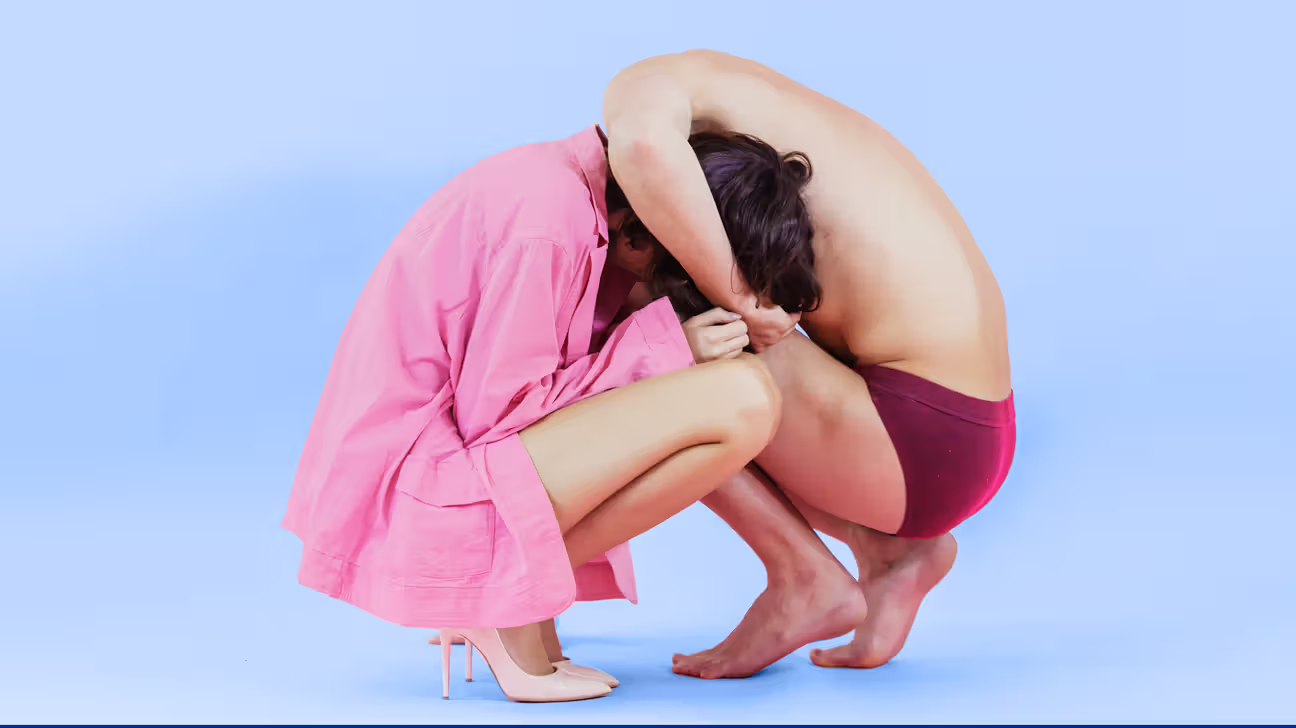
Think of them as the evil twin of period cramps—same dull-to-stabby pelvic ache, but they crash the party right after climax. Some women feel a quick spasm that fades in minutes; others get a lingering ache that radiates to the lower back or rectum, occasionally paired with nausea or a “charley-horse” sensation deep in the vagina.
1.2 How Common Is It? Prevalence and Demographics
Because “I cramp after I come” isn’t typical brunch chatter, exact numbers are fuzzy. A 2018 ACOG patient poll found 9% of respondents experienced pain after orgasm in the past year, peaking between ages 25-35. Trans men and non-binary folks with uteruses report it too, especially if testosterone therapy has thinned vaginal tissues. Bottom line: if it’s happening to you, you’re riding a crowded (if silent) subway car.
2. Primary Physiological Causes of Post-Orgasmic Cramps
2.1 The Role of Uterine Contractions
Orgasm is basically a choreographed ripple of contractions—first the uterus, then the vaginal walls and pelvic floor. In some women the uterine squeeze continues a beat too long, like a drummer who won’t stop drumming. Those mini-charley-horses can ache for minutes, especially if the uterus is already tender from an upcoming period.
2.2 Pelvic Floor Muscle Involvement: Spasms and Tension
Your pelvic floor is a hammock of muscles that trampoline-jump during climax. If those muscles are tight from hours of desk-sitting or chronic stress, they can go into a painful cramp the same way a calf muscle seizes during a 5 a.m. stretch. High-tone pelvic floor dysfunction is basically the “knots in your shoulders” scenario—only south of the border.
2.3 The Role of Oxytocin and Hormonal Surges
Orgasm floods you with oxytocin, the “cuddle hormone” that also makes smooth muscle (uterus included) contract harder. Estrogen dips mid-cycle or right before your period can leave tissues drier and nerves crankier, turning a normal oxytocin rush into an ouch-fest.
3. Potential Contributing Factors & Triggers
3.1 Dehydration and Electrolyte Imbalance
Muscles need potassium and magnesium the way your phone needs battery. A sweaty spin class followed by a boozy dinner date? Hello lactic acid and hello cramps. Even mild dehydration can make pelvic muscles twitchy.
3.2 Sexual Position and Physical Strain
Positions that tilt the uterus backward (think: knees-to-chest missionary or deep doggy-style) can bump the cervix and trigger reflex contractions. It’s the pelvic equivalent of hitting your funny bone—except the “bone” is your uterus and the “funny” is not hilarious.
3.3 Underlying Gynecological Conditions (Endometriosis, Adenomyosis, Fibroids, etc.)
Endometriosis lesions on the uterosacral ligaments can stretch like rubber bands during orgasm. Adenomyosis turns uterine muscle into a pin-cushion of misplaced tissue, making post-climax contractions extra spicy. Fibroids act like speed bumps in a parking lot—hit them hard enough and everything jolts.
3.4 Bladder Fullness
A full bladder pushes the uterus forward, increasing the “bang zone” during sex. Emptying pre-game can cut cramp odds by up to 30%, according to a small Healthline survey of pelvic-PT patients.
3.5 Psychological Factors: Stress and Anxiety
Cortisol, the stress hormone, primes muscles for fight-or-flight. If your brain is halfway planning tomorrow’s work presentation, your pelvic floor may stay semi-clenched, priming it for spasmodic backlash once the feel-good hormones wear off.
4. Immediate Relief Strategies for Post-Orgasmic Cramps
4.1 Applying Heat
Slap a microwaved rice sock or hot-water bottle on your lower abdomen. Heat increases blood flow and relaxes smooth muscle—like putting a warm towel on a Charley horse, but for your uterus.
4.2 Hydration and Electrolyte Replenishment
Chug 12-16 oz of water spiked with a pinch of salt and a squeeze of citrus, or grab an electrolyte packet. Think of it as WD-40 for your ion channels.
4.3 Gentle Movement and Pelvic Floor Stretches
Child’s pose, happy baby, or a simple supine butterfly stretch can tell your pelvic floor, “Party’s over, you can clock out now.” Two minutes is often enough to reset the neuromuscular chatter.
4.4 Relaxation Techniques and Deep Breathing
Try 4-7-8 breathing: inhale for 4 seconds, hold for 7, exhale for 8. This activates the parasympathetic “rest-and-digest” response, lowering pelvic vascular pressure.
4.5 Over-the-Counter Pain Relief (NSAIDs)
Ibuprofen (400-600 mg) blocks prostaglandins—the same chemicals that make period cramps sing. Take it within 30 minutes post-orgasm if you’re prone to pain.
4.6 Urination
Peeing flushes bacteria and empties the bladder, preventing lingering uterine displacement. Plus, the act itself can reflexively calm pelvic muscles (thank you, parasympathetic nerves).
5. Preventative Measures & Long-Term Management
5.1 Prioritizing Hydration
Rule of thumb: half your body weight (lbs) in ounces of water daily, plus an extra 8 oz for every 30 minutes of sweaty activity. Add a banana or a handful of pumpkin seeds for a magnesium boost.
5.2 Pelvic Floor Physical Therapy
A trained pelvic PT can teach reverse Kegels (yes, relaxing is a skill) and use biofeedback to tame high-tone muscles. Mayo Clinic data show 70% of women report less post-orgasm pain after 6-8 sessions.
5.3 Experimenting with Sexual Positions
Keep a “sex log” for two weeks: note positions, depth, angle, and pain rating. You’ll quickly ID your trigger geometry. Shallow-entry positions (spooning, cowgirl leaning forward) often reduce cervical collision.
5.4 Managing Underlying Health Conditions
If endometriosis or fibroids are the villains, hormonal IUDs or excision surgery can cut post-orgasm pain by more than half. Partner with a gynecologist who specializes in minimally invasive techniques.
5.5 Incorporating Stress Management
Apps like Headspace or Calm, yoga, or a 10-minute dance break to Dua Lipa can drop cortisol levels 15-20%, loosening that invisible vise around your pelvis.
5.6 Ensuring Adequate Foreplay and Arousal
Increased blood flow from 15-20 minutes of build-up plumps vaginal tissues, cushioning the cervix and reducing “deep thrust” bruising. Think of it as pre-heating the oven so nothing sticks.
6. When to Seek Medical Attention
6.1 Differentiating Normal Discomfort from Concerning Pain
An occasional twinge that fades by the time you’ve scrolled two TikToks? Normal. Pain that makes you cancel brunch or double over on the bathroom floor? Not normal.
6.2 Red Flag Symptoms (Severe Pain, Bleeding, Fever, etc.)
Seek same-day care if cramps come with heavy bleeding unrelated to your period, fever, vomiting, or pain that NSAIDs can’t touch. These could signal ovarian cyst rupture, pelvic inflammatory disease, or ectopic pregnancy.
6.3 Which Healthcare Provider to See: Gynecologists and Specialists
Start with a board-certified gynecologist; ask for a pelvic-floor-trained PT referral if no obvious pathology appears. For suspected endometriosis, find an excision specialist—NICHD directories list accredited centers.
7. Myths vs. Facts About Post-Orgasmic Cramps
Myth: “If you get cramps after sex, you must be infertile.”
Fact: Most causes have zero bearing on fertility; only severe untreated conditions like extensive adhesions might impact conception.
Myth: “Only women who’ve had kids experience it.”
Fact: Nulliparous women actually report higher rates, possibly because childbirth can, ironically, relax pelvic musculature.
Myth: “It’s all in your head.”
Fact: Functional MRI studies show real changes in pelvic muscle oxygenation post-orgasm—this isn’t imaginary pain.
8. Frequently Asked Questions (FAQ)
Q1: Is it normal to get cramps every time after an orgasm?
Not really. Occasional episodes are common, but consistent pain warrants evaluation for conditions like endometriosis or pelvic floor dysfunction.
Q2: Can men experience something similar?
Yes—men can get post-ejaculatory “blue ball” cramps from pelvic floor spasms or prostate inflammation, though it’s less talked about.
Q3: Do these cramps affect fertility?
Generally no. Only if an underlying disorder (e.g., advanced endometriosis) disrupts anatomy or ovulation.
Q4: Should I avoid sex if I get these cramps?
No need to embargo pleasure. Use the prevention playbook above, and consider positions that limit deep penetration until you identify triggers.
Q5: How quickly should relief strategies work?
Heat and hydration can ease pain within 10-15 minutes; NSAIDs peak at around 45 minutes. If pain persists beyond an hour, escalate care.
9. Key Takeaways and Conclusion
Post-orgasmic cramps are the annoying party crasher nobody invited, but they rarely signal disaster. Most times the culprits are run-of-the-mill uterine contractions, dehydrated muscles, or a high-tone pelvic floor. Simple fixes—heat, hydration, position tweaks, and stress less—send the crasher packing. Persistent or escalating pain deserves a professional once-over. Remember: pleasure is your birthright; don’t let a few rogue contractions hijack the after-glow. Arm yourself with knowledge, advocate for your comfort, and keep the orgasms coming—minus the cramps.
10. References and Further Reading
- American College of Obstetricians and Gynecologists – Patient FAQ on painful intercourse.
- Mayo Clinic – Overview of pelvic floor dysfunction.
- NHS UK – Guide to endometriosis symptoms.
- Healthline – Evidence-based summary on dysorgasmia.
- NICHD – Directory of endometriosis treatment centers.
To locate a pelvic-floor physical therapist in the U.S., search the American Physical Therapy Association’s PT locator; in the UK, use the Chartered Society of Physiotherapy directory. Knowledge is power—and power, unlike cramps, feels fantastic.