Picture this: you’re brushing your teeth, eyeing your girlfriend in the mirror, and thinking, “Tonight could be the night.” You drop every hint short of spelling “SEX” with the floss—yet bedtime rolls around and she’s cozied up with Netflix, not you. Cue the internal groan: “Why does I always have to start things?”
If that scene feels familiar, you’re far from alone. In a 2020 Gottman Institute survey, 62 % of couples admitted they’re mildly-to-wildly dissatisfied with how often each partner initiates. The frustration isn’t just about orgasms—it’s about feeling desired, valued, and like the erotic workload isn’t permanently stuck on your to-do list.
This article is your no-shame, research-backed field guide to figuring out why your girlfriend rarely makes the first move—and, more importantly, how to change the pattern without guilt trips, ultimatums, or turning into the needy stereotype you swore you’d never become. We’ll dig into hormones, heart-stuff, household dynamics, and the million tiny stressors that can slam the brakes on female desire. Then we’ll swap the magnifying glass for a toolbox: concrete communication hacks, pleasure upgrades, and boundary-setting tricks you can start tonight (or whenever you both feel ready). The goal isn’t to “train” her to pounce on command; it’s to co-create a relationship where initiation feels natural, mutual, and genuinely fun.
1. Understanding the Potential Causes
Desire is like a jazz band: if one instrument is off—say, the drummer’s exhausted or the saxophonist is nursing a years-old grudge—the whole tune falls apart. Below are the most common reasons the music isn’t starting.
1.1. Physical & Hormonal Factors
Fatigue & stress. The CDC reports that 1 in 3 U.S. adults clocks less than seven hours of sleep. Chronic tiredness drops testosterone (yes, women need it too) and dopamine—two chemicals that put the “go” in libido.
Hormonal shifts. Birth-control pills can lower free testosterone by up to 50 %, according to a Mayo Clinic review. Thyroid issues, post-partum changes, or approaching perimenopause can also flatten arousal signals.
Meds & health conditions. SSRIs, antihistamines, blood-pressure pills, and even some acne drugs list “decreased sex drive” on their résumés. Endometriosis or chronic yeast infections can make penetration feel like a lit match—hardly an aphrodisiac.
Body-image blues. A 2021 Healthline poll found 52 % of women have avoided sex because they felt “too out of shape.” If she’s busy sucking in her stomach, she can’t surrender to pleasure.
1.2. Psychological & Emotional Factors
Mental-health fog. Anxiety hijacks the amygdala; depression saps dopamine. Translation: even a playful butt-grab can feel like one more chore on an already overwhelming list.
Trauma residue. The RAINN network estimates that every 68 seconds an American is sexually assaulted. Past trauma can make initiation feel dangerous, not flirtatious.
Shame & self-talk. Messages like “good girls don’t chase it” run deep. If she’s subconsciously waiting for permission, taking the lead triggers guilt, not excitement.
Relationship resentment. Maybe you thanked her for “babysitting” your own kid or forgot her promotion celebration. Tiny emotional paper cuts accumulate into a billboard that reads, “I’m not valued here—why would I gift you my desire?”
1.3. Relationship Dynamics
Initiation autopilot. Once a pattern sets—you ask, she responds—stepping out of role feels as weird as using your left hand to brush your teeth.
Emotional labor overload. If she’s managing groceries, your mom’s birthday, and the dog’s flea meds, adding “seduction manager” is the final straw.
Affection drought. Couples who kiss just for the heck of it report three times higher sexual satisfaction. No kissy, no clicky.
1.4. Sexual Factors
Libido gap. Spontaneous vs. responsive desire is real: many women rarely feel “horny out of nowhere,” but warm up gorgeously once stimulation starts (see Emily Nagoski’s Come As You Are).
Orgasm deficit. If she’s batting 0 for her last 15 encounters, initiating feels like volunteering for frustration.
Confidence crash. Fear of fumbling—What if I look awkward? What if he says no?—can paralyze even an otherwise confident woman.
1.5. External Stressors
Inflation, layoffs, grad-school exams, or a sick parent can shunt blood flow away from the genitals and into survival mode. The body’s mantra: “If you’re running from a lion, ovulate later.”
1.6. Personality & Communication Style
Some people express love by restocking your snack drawer, not mounting you in the hallway. Others are passive by temperament—initiating feels pushy, not playful. Recognizing these styles prevents mislabeling her as “uninterested” when she’s actually speaking a different dialect of desire.
2. Exploring Effective Solutions & Approaches
Ready to swap detective mode for collaborator mode? Roll up your sleeves—and maybe wash the dishes while you’re at it.
2.1. Improving Communication About Sex & Needs
Pick the right arena. Not in bed, naked, post-rejection. Try a walk or car ride—side-by-side conversations feel less confrontational.
Use the “I-vision” formula: “I feel ___ when ___ because ___. Could we try ___?” Example: “I feel disconnected when I’m always the one asking for sex because I worry I’m pressuring you. Could we brainstorm ways to share initiation?”
Mirror, then validate. After she speaks, paraphrase: “So you’re saying you’re often exhausted and don’t know how to signal you’re open without feeling awkward—did I get that right?” Instant empathy upgrade.
2.2. Prioritizing Emotional Intimacy & Connection
Schedule 20-minute daily “stress debriefs” with no phones. Trade back rubs. Celebrate micro-wins (she finally beat that video-game boss? Champagne emoji!). Emotional deposits become erotic currency.
2.3. Reducing Pressure and Creating a Safe Space
Declare occasional “no-intercourse nights” where you’ll kiss, massage, or fool around—genital-free. Paradoxically, removing the finish line revs engines; the brain whispers, “No stakes? Let’s play.”
2.4. Enhancing Sexual Satisfaction & Mutual Exploration
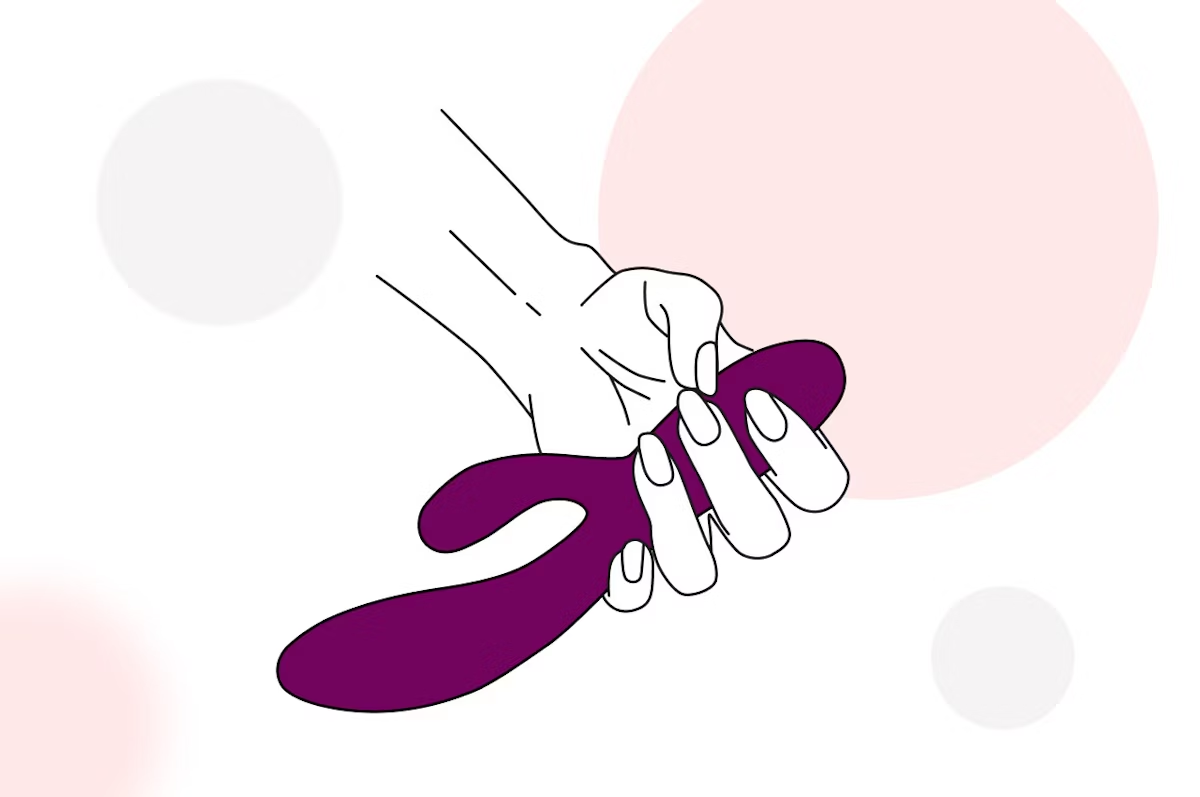
Ask her to map her pleasure zones—literally draw on a handout of a body. Invest in a small, quiet vibrator (We-Vibe or Dame are fan faves). Offer orgasm before penetration; studies show women’s desire spikes post-climax thanks to oxytocin surges.
2.5. Addressing Underlying Issues Together
Create a shared Google Sheet of chores and divvy them like teammates, not scorekeepers. If finances are the elephant, set a 30-minute “money date” every Sunday. External stress handled = bandwidth for indoor Olympics.
2.6. Reframing Initiation as a Shared Responsibility
Develop a private code: two quick squeezes on the forearm means “I’m game if you are.” Or try the “Want-Will-Won’t” list—each of you marks sexual activities in green, yellow, red. Suddenly initiation becomes a collaborative menu, not a pop quiz.
2.7. Considering Professional Help
If talks stall, pain persists, or either of you has trauma history, a certified sex therapist (find one via AASECT) can fast-track progress. Expect homework: sensate-focus exercises, communication scripts, maybe a referral to an endocrinologist if hormones are haywire.
2.8. Practicing Patience, Understanding, and Self-Care
Rejection stings—acknowledge it. Journal, hit the gym, call a friend. The more you regulate your own emotions, the safer she’ll feel leaning in. Remember: desire isn’t a vending machine; it’s a garden. Water, wait, weed.
3. Frequently Asked Questions (FAQ)
Q: Is it normal for one partner to initiate less often?
A: Totally. Research shows a 60/40 or even 70/30 split is typical. The issue is satisfaction with the ratio, not perfect parity.
Q: Could her lack of initiation mean she’s not attracted to me anymore?
A: Possibly—but far more likely it’s stress, hormones, or resentment. Attraction is elastic; address the context first before panic-diagnosing “she hates my face.”
Q: How can I bring this up without making her feel attacked?
A: Use curiosity, not criticism: “I’ve noticed we have different rhythms—can we talk about how to sync them better?” Bonus points if you’re doing dishes while asking.
Q: What if she says she’s just ‘not in the mood’ or has a low libido?
A: Believe her, then explore why. Is she on SSRIs? Exhausted? Bored? Low libido is a symptom, not a verdict.
Q: How long should I wait before considering this a serious problem?
A: If the imbalance is causing you distress now, it’s already serious. That said, allow 4–6 weeks of consistent collaborative effort before escalating to professional help.
Q: Are there books or resources we can explore together?
A: Absolutely—see the reading list below. Start with Nagoski’s Come As You Are for science-backed reassurance that she’s not broken.
4. Key Takeaways & Final Thoughts
Desire is less a light switch and more a soufflé—temperature-sensitive, easy to deflate, magical when it rises. Your girlfriend’s hesitation isn’t a personal snub; it’s a mosaic of biology, psychology, and life logistics. Approach it as teammates, not opponents: communicate candidly, divide real-world burdens, and prioritize pleasure over performance. With patience, playfulness, and maybe a well-placed vibrator, many couples discover that initiation starts flowing both ways—and the soufflé rises higher than ever.
5. Additional Resources & References
Recommended Books:
Come As You Are – Emily Nagoski
Mating in Captivity – Esther Perel
The Sex-Starved Marriage – Michele Weiner-Davis
Authoritative Websites:
AASECT – Find certified sex therapists
The Gottman Institute – Research-based relationship tools
Planned Parenthood – Sexual health basics
Podcasts & YouTube:
“Sex with Emily” (Dr. Emily Morse)
“Where Should We Begin?” with Esther Perel
Healthline’s YouTube series “Sexual Health 101”
Now close this tab, send her a two-arm squeeze, and start the conversation—no floss required.